Understanding biometric security basics
What is biometric security
In a climate where fraud costs South African businesses millions, biometric security continues to tilt the balance—recent surveys show deployments can cut high-risk fraud by as much as 70%!
Understanding biometric security basics means exploring what makes a person unique and how that identity is verified. From fingerprints and iris scans to voice and behavioral patterns, biometric signals are measured, stored, and compared. In the biometric security book, enrollment, template creation, and decision stages are laid out, along with vulnerabilities such as spoofing and template theft and how hardware, software, and policy layers align to protect a user’s identity.
The basics also remind us that privacy, consent, and governance matter as much as technology. In local contexts, interoperable standards and responsible data handling shape every step, keeping conversations focused on security without crippling usability.
Core benefits and limitations of biometrics
Biometric checks reshape how trust is built in South Africa’s workplaces. In the biometric security book, basics are anchored in real-world use, showing how fingerprints, iris patterns, and voice prints become verified identities—fast, non-transferable, and hard to spoof. Deployment decisions now hinge on balancing speed with privacy, and that practicality matters!
Core benefits include:
- Speed and convenience in access control and onboarding
- Strong non-repudiation that ties actions to a unique identity
- Audit trails that support governance and compliance
Limitations persist as privacy concerns, consent, and governance require careful handling. Spoofing attempts, template theft, and cross-device interoperability introduce risk, especially in local deployments. These factors are treated alongside hardware, software, and policy layers that defend identity while preserving usability.
How biometric authentication differs from password and token
Imagine a world where a finger press unlocks doors faster than your coffee run. Biometric authentication does that, using fingerprints, iris signals, or voice patterns as verified identities—fast, non-transferable, and hard to spoof. The biometric security book guides readers through how these signals prove who you are, not just what you know, with practical insights suited to South Africa’s workplaces and security budgets.
Key distinctions from passwords and tokens include:
- Non-transferability: your fingerprint can’t be fished from a password vault.
- Live checks: liveness and anti-spoofing guard against fakes.
- Revocation and recovery: clear pathways when a trait changes or is compromised.
As speed and privacy dance, deployment decisions hinge on governance, consent, and a user-friendly experience that respects local data laws.
Common myths about biometric security
Security basics don’t have to be confusing. A fingerprint can unlock a door faster than your coffee run—a quick reminder that identity can move at the speed of a touch. This biometric security book shows how signals prove who you are, not just what you know, with South Africa’s workplaces and budgets in mind.
Common myths bite into trust. For example:
- Biometrics are foolproof — Reality: no system is perfect; spoofing and false rejections happen, so multi-factor design matters.
- Once enrolled, traits never change — Reality: some signals can drift and devices update recognition thresholds.
- Biometrics are private and cannot be hacked — Reality: biometric data can be stolen; safeguards and revocation plans are essential.
Key terms you should know
Biometrics reshape how SA workplaces grant access, often slashing unlock times to the tempo of a touch. In this biometric security book, identity moves from guesswork to signals that speak for you. “Identity moves at the speed of a touch,” a South African security leader says, underscoring how speed must meet responsibility.
Understanding biometric security basics begins with key terms you should know for a clear, confident dialogue.
- Enrollment and templates
- Matching score and thresholds
- Liveness detection and anti-spoofing
- Revocation and privacy by design
These terms anchor discussions and help separate hype from design.
From sensors to policy, the flow remains pragmatic, shaped by budgets and privacy laws in South Africa.
Types of biometric technologies covered in security books
Fingerprint recognition essentials
Iris and retina scanning fundamentals
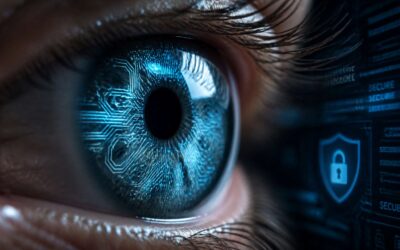
Across a biometric security book, a gaze becomes governance, and I have seen how a gaze can gate a life in minutes. ‘The eyes never forget a pattern,’ a line that lingers as readers weigh iris recognition’s speed against user comfort. In practice, iris systems promise swift enrollment and notably low false acceptance in controlled environments.
Iris scanning fundamentals hinge on near-infrared capture of the iris texture, a pattern stable for years. It is non-contact, reducing hygiene risks, yet performance hinges on lighting, pupil state, and lens wear.
Retina scanning maps the retina’s vasculature—supremely secure but invasive and less convenient, limiting everyday use in many South African settings.
- Iris recognition: non-contact, fast, high acceptance
- Retina scanning: strongest security, more invasive
- Emerging modalities: hybrids and vein-based approaches
Together, they illuminate the spectrum readers explore.
Facial recognition and voice biometrics overview
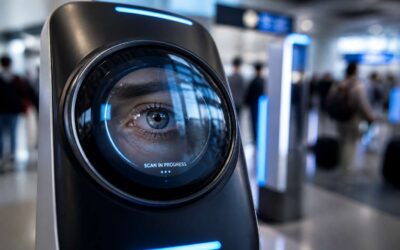
Across South Africa’s campuses and call centers, a single glance can decide who passes and who waits. Facial recognition and voice biometrics rise as twin pillars, turning speed into security and risk into routine—storylines you’ll find in a biometric security book.
Here’s how they work in practice:
- Facial recognition: non-contact, fast enrollment, robustness to lighting and pose, yet mindful of privacy and spoofing challenges.
- Voice biometrics: uses vocal patterns and cadence, convenient for remote access, but sensitive to background noise and health-related voice changes.
In SA, regulatory landscapes and data protection norms shape deployment, reminding readers that technology must be paired with trust.
Behavioral biometrics basics such as keystroke dynamics
Across South Africa’s campuses and call centers, behavioral biometrics have emerged as the quiet guardians of access. A recent study finds such cues can cut fraud losses by up to 60%, turning routine keystrokes into a living password.
In the biometric security book, the basics of behavioral biometrics unfold with keystroke dynamics as the star. Subtle rhythm and cadence become a signature—less visible than fingerprints, yet deeply diagnostic.
- Keystroke dynamics
- Mouse dynamics
- Gait and touch patterns
These patterns thrive in adaptive security layers, forgiving mild noise while catching anomalies that passwords miss.
Multimodal and fusion approaches in biometrics
The biometric security book opens a panorama of modalities beyond the familiar. Multimodal systems fuse two or more signals to form a robust identity verdict, turning noisy data into confident access decisions. The result is a layered approach that softens the edges of any single mechanism.
Fusion strategies—sensor-level, feature-level, and decision-level—are examined with practical aplomb. Each layer trades latency, privacy, and resilience to spoofing, guiding readers on when to combine signals and how to calibrate thresholds for real-world environments, such as campuses and call centers.
The chapter mix keeps pace with governance and ethics, illustrating how multimodal biometrics can streamline authentication while respecting user consent. It’s a nuanced tour that makes sense of the future tense in biometric security.
Choosing the right biometric security book: criteria and features
Target audience and difficulty level
“Security is as strong as the book you read.” In South Africa, digital payments and government services push biometric programs forward, making the right biometric security book a practical necessity for teams.
Choose by criteria that matter in real-world work:
- Clear explanations of core concepts and tradeoffs
- Up-to-date coverage of fraud tactics, privacy controls, and POPIA-aligned practice
- Real-world, South Africa–relevant case studies with vendor-neutral guidance
Target audience and difficulty level: whether you’re a security professional, risk manager, or policymaker, pick a volume that starts with fundamentals and builds to advanced topics. Look for accessible language, glossaries, and clear diagrams to stay steeped in current practice.
The right biometric security book aligns with your program goals, budget, and regulatory needs, becoming a dependable reference in SA offices and classrooms.
Depth of technical detail and practical guidance
Biometric deployments aren’t optional in SA’s digitized landscape—they’re the backbone of payments and public services. Choosing the right biometric security book isn’t flashy; it’s practical foresight. A well-chosen volume translates complex math, policy constraints, and real-world risk into a usable playbook your team can reach for on a Tuesday afternoon.
- Clear explanations that bridge theory and operation, with explicit tradeoffs
- Up-to-date coverage of fraud tactics, privacy controls, and POPIA-aligned practice
- South Africa–relevant, vendor-neutral case studies that map to local challenges
- Accessible language, glossaries, and diagrams that scale from fundamentals to advanced topics
Beyond depth, seek alignment with your program goals, budget, and regulatory needs—so the book becomes a dependable reference in SA offices and classrooms.
Case studies and real-world implementations
In a digitized SA landscape where every keystroke carries risk, the right biometric security book acts as a trusted compass. It translates theory into the daily grind of a SA office—crisp tradeoffs, practical scenarios, and coverage that scales from fundamentals to advanced topics. A strong volume anchors concepts in local realities—payments, public services, and identity schemes—without getting lost in abstract math, guiding teams through risk, privacy, and governance.
Case studies and real-world implementations bring the pages to life. Seek SA-relevant examples that map to local challenges—mobile money, government portals, and healthcare identity workflows—shown in a vendor-neutral light so teams can draw parallels and avoid vendor lock-in.
- South Africa–focused case studies across finance, government, and healthcare
- Clear mapping to privacy, risk management, and governance considerations
- Glossaries and diagrams that scale from Fundamentals to advanced architectures
Illustrations, diagrams, and glossary quality
Bruce Schneier once said, “Security is a process, not a product.” In South Africa’s fast-moving digital landscape, a biometric security book should guide practice, turning theory into daily decisions for SA offices.
Choosing the right one means weighing criteria that translate to local needs—payments, government portals, and healthcare identity workflows. Consider the following:
- Local SA relevance to payments, government portals, and healthcare identity workflows.
- Vendor-neutral narratives with clear privacy, risk management, and governance coverage.
- Illustrations, diagrams, and a glossary that scale from fundamentals to advanced architectures.
- Glossary quality: accessible terms, cross-references, and practical definitions.
- South Africa-focused case studies across finance, government, and healthcare.
A well-chosen volume becomes a compass through privacy, risk management, and governance, helping teams translate policy into everyday security craft.
Updates and coverage of legal and ethical considerations
Data protection is not a feature, it’s a culture. In South Africa’s fast-moving digital landscape, a biometric security book should translate policy into practice—no mystic techno-babble, just practical guardrails for everyday decisions. Look for a volume that speaks to SA realities in payments, government portals, and healthcare identity workflows, while staying vendor-neutral and focused on privacy, risk management, and governance rather than glossy hype.
Updates and coverage of legal and ethical considerations matter most. Seek maps to POPIA, data minimization, consent, and accountability, plus governance templates and visuals that scale from fundamentals to architecture-level decisions—without sacrificing readability. Prefer SA-focused micro-notes and cross-references, with a glossary that clarifies terms in plain language, helping teams translate policy into everyday security craft.
Practical applications and real-world case studies in biometric security
Enterprise authentication and access control
A bold stat lands like a keystroke in the boardroom: 60% of large enterprises now rely on biometric authentication for at least one access point. In this biometric security book, practice meets philosophy as fingerprints, iris scans, and voice patterns move from novelty to necessity. Enterprise authentication isn’t merely technology; it’s governance, trust, and risk wrapped in code.
Practical applications span entrances, data centers, and remote admin consoles. Consider these real-world deployments:
- Banking branches with touchless entry
- Tech campuses for server-room access
- Hospitals safeguarding patient records
In South Africa, privacy, consent, and crime prevention shape every rollout, demanding governance and oversight. The human element keeps the technology honest, and the security story remains unfinished.
Mobile devices and consumer applications
A bold stat lands like a keystroke in the boardroom: 60% of large enterprises now rely on biometric authentication for at least one access point. In the biometric security book, practicalities bloom from myth—fingerprints, voice, and iris scans becoming ordinary tools, shaping governance as much as code.
On mobile devices and in everyday apps, biometrics turn friction into safety. Consider these real-world deployments:
- Smartphone banking apps: login and payments via biometrics
- Wearables and wallets: quick, fingerprint-like authentication
- Voice-enabled kiosks for payments and access
In South Africa, privacy, consent, and crime prevention shape every rollout, demanding governance and oversight. The human element keeps the technology honest, and the security story remains unfinished.
Health care and government use cases
A bold stat lands like a keystroke in the boardroom: 60% of large enterprises rely on biometric authentication for at least one access point. In health care, practical deployments read like case studies from a biometric security book: patient identification at admission, accurate medication dispensing, and fast, secure access to records.
- Patient ID verification at triage and admission
- Medication administration tied to biometric checks to prevent errors
- Secure access to laboratories and imaging systems via multimodal sensing
Government contexts deploy biometric safeguards for border control, citizen services, and identity management, boosting security without slowing the public. In South Africa’s privacy-forward landscape, governance as much as gadgetry shapes these outcomes.
Privacy-preserving biometrics and on-device processing
A bold claim guides boardroom debates: privacy-preserving biometrics can unlock security without surrendering personal data. On-device processing keeps biometric templates at the edge, turning everyday devices into trusted sentinels—and giving readers of the biometric security book a practical compass for modern privacy.
Real-world deployments read like chronicles: healthcare workflows at the point of care, border checks that move swiftly without exposing raw data, and citizen services where identity is verified while data stays local.
- Local biometric templates stored securely on devices
- Secure enclaves and trusted execution environments
- Edge-based matching with privacy-preserving fusion
These patterns shape South Africa’s privacy-forward landscape, guiding policy and practice toward trustworthy digital gates.
Security testing, evaluation, and compliance
Biometric deployments can cut authentication time by up to 60%, a statistic that makes boards lean in and auditors listen. This biometric security book translates testing, evaluation, and compliance into action—from lab validation to live deployments. Real-world cases unfold across healthcare, border controls, and citizen services, where privacy-preserving designs keep data local.
- Security testing and evaluation strategies: fuzzing, spoof-resistance, and robust liveness checks
- Compliance and governance: POPIA alignment, audit trails, and third-party certs
In South Africa’s privacy-forward landscape, these patterns empower trusted gates and practical privacy. The journey from labs to live services is visible on patient kiosks, border lanes, and citizen portals.
Future trends, challenges, and security considerations in biometrics
Emerging modalities and wearables
“Security is a memory,” whispers the night as biometric sensors learn to read breath and gait. I watch the haze of data thicken with promise: future trends where wearables weave identity into daily life, ambient authentication, and multimodal fusion that learns from breath and pulse. The night is long, yet secure access grows brighter!
Emerging modalities and wearables promise new ways to verify without friction. Consider:
- Skin-embedded sensors reading vascular or sweat signals
- Gait, posture, and keystroke dynamics captured by everyday movement
- On-device fusion of facial, voice, and behavioral data with privacy-preserving cryptography
Security considerations and challenges: spoofing, synthetic identities, cross-modality interference, and data leakage. This biometric security book frames the arc from lab to living room. Defense rests on on-device processing, encrypted templates, and continuous risk assessment. In South Africa, POPIA guides balance with transparency.
Anti-spoofing, liveness detection, and spoof resilience
The future isn’t a door; it’s a chorus of signals, and in this biometric security book, anti-spoofing and liveness detection are the first line of defense against a tide of synthetic identities. A single breath or heartbeat could decide a moment’s access—and that’s thrilling and terrifying in equal measure.
Future trends and security considerations include:
- Anti-spoofing and robust liveness detection as baseline expectations
- Spoof resilience through multi-factor, cross-modality verification
- On-device processing and privacy-preserving cryptography to guard templates
Cross-modality interference and data leakage remain the lurking risks as biometrics moves from lab to living room, and the fight to keep access veracious grows more intricate in South Africa’s diverse digital landscape.
Privacy, consent, and data protection regulations
Biometric systems are evolving as a chorus of signals rather than a single lock. In the biometric security book, future trends rely on anti-spoofing and robust liveness detection as the baseline, with spoof resilience built through multi-factor and cross-modality verification. On-device processing and privacy-preserving cryptography are reshaping how templates are handled—keeping sensitive data closer to the user and out of reach to prying eyes. Yet cross-modality interference and data leakage remain the lurking risks as biometrics moves from lab to living room, especially across South Africa’s diverse digital landscape!
Privacy, consent, and data protection regulations will define the rules of engagement. In South Africa, POPIA compliance, purpose limitation, and data minimization are no longer options but baseline expectations. The challenge is explaining value while preserving user autonomy and trust, letting individuals control their signals without stifling convenience.
AI, machine learning, and bias mitigation in biometrics
Biometric systems are morphing from simple gates into nuanced interpreters of identity. The next frontier hinges on fairness, explainability, and privacy-by-design, not just speed. In the biometric security book, authors map how AI and machine learning can expose and correct bias, while keeping sensitive signals on device and under rigorous governance. As South Africa accelerates digital adoption, these trends matter at every level—from banks to campuses, where trust becomes the true authentication factor.
- Federated and on-device learning to keep data local
- Privacy-preserving cryptography and secure enclaves for templates
- Transparent auditing and culturally aware datasets for bias mitigation
The challenges remain: ensuring consent, guarding against data leakage, and aligning with POPIA’s principles even as user expectations rise. Vigilance and governance will be the ongoing compass.
Governance, standards, and interoperability
One industry study indicates that governance-first biometrics can boost user trust by up to 30%, a bias-aware approach that resonates in SA’s rapidly digitising landscape. In the biometric security book, this shift is framed as a move from mere speed to responsible accountability, with governance as the true authentication factor.
Governance, standards, and interoperability are not abstract ideals but practical architectures shaping every deployment—from banks to campuses. The following elements increasingly shape decisions:
- Harmonized governance frameworks across sectors
- Interoperable biometric formats and vendor certification
Regulatory alignment with POPIA, secure enclaves for templates, and on-device processing are no longer optional. Interoperability challenges must coexist with strict consent and data minimization, lest data leakage overshadow gains in user experience. The biometric security book invites readers to navigate these tensions with vigilance and governance as compass.

0 Comments