Biometric security risks and challenges
Data privacy and consent in biometric systems
In a city of glass and shadows, a fingertip can unlock more than doors—it’s a whisper of identity. “Identity is a password you can never reset,” whispers the night, and these biometric security concerns ripple through banks, clinics, and digital gateways, turning every scan into a verdict and every mismatch into a haunting echo.
Yet data privacy and consent in biometric systems are not mere formalities. In South Africa, POPIA frames the boundaries, insisting on consent and purpose limitation while recognizing the permanence of once-stored traits.
- Biometric traits are immutable—breach here cannot be “reset” like a password.
- Consent and transparency shape who may access which data and for what purpose.
- Storage and cross-border transfers raise further risk of leakage and misuse.
I have watched trust falter, a fragile bridge built of governance, ethics, and restraint; when that bridge creaks, even a single breach becomes an omen.
Biometric template security and data storage
In the age where glass and code meet, biometric templates are the unresettable shadows of identity. A 2023 industry survey found that 47% fear biometric templates cannot be revoked once breached. These biometric security concerns haunt banks, clinics, and digital gateways alike.
Biometric template security hinges on how data rests and moves. Stored or cached templates, even when encrypted, become targets for thieves craving keys to countless doors. When breached, a stolen template does not vanish with a password reset.
Risks cluster in three shadows:
- Template leakage from unprotected storage or backups
- Spoofing or replay attacks using forged templates
- Cross-system template matching that enables correlation of identities
Even with encryption and guarded hardware, misuse lingers, fed by supply chain frailties and insider access.
Across South Africa’s evolving digital tapestry, the tension between wonder and risk threads through every archive, every gateway, every whispered yes.
Spoofing, presentation attacks, and liveness detection
Within biometric security concerns, threats wear the most persuasive disguises as they blur the line between hero and villain. A recent survey shows 58% of security chiefs fear spoofing will outrun defenses soon, a forecast that unsettles South Africa’s banks, clinics, and digital gateways alike!
- Spoofing using high-fidelity 2D/3D replicas
- Replay and substitution attacks that bypass static checks
- Cross-device presentation attacks that exploit the gaps in liveness checks
Even the best liveness checks are not panaceas; they hinge on sensors, lighting, and user behavior, which in turn invites false rejections and user frustration. The challenge is to weave consistent, real-time judgments across devices and contexts without tipping into intrusiveness.
Accuracy metrics and risk of false accepts/rejects
Biometric security concerns often hinge on the tension between protection and practicality. Accuracy metrics like false accept rate (FAR) and false reject rate (FRR) reveal how quickly a system errs—letting impostors in or denying legitimate users. In South Africa’s banks and clinics, these numbers aren’t abstract; they map to real-world trust, device fragmentation, and daily digital rituals.
Predicting performance across devices demands context. The following factors shape the risk of false accepts and false rejects:
- Sensor quality and lighting variability across devices
- Enrollment quality and template stability
- Population diversity and biometric modality suitability
Ultimately, biometric security concerns hinge on how we calibrate friction and assurance. When thresholds tilt toward security, user frustration climbs; when they lean toward convenience, impostors slip through—an ethical balance we must measure in every deployment.
Biometric modalities and threat profiles
Fingerprint scanning vulnerabilities
Fingerprints, the most intimate of biometrics, come in optical, capacitive, and ultrasonic flavors, each with charm and quirks. In the realm of biometric security concerns, fingerprints win popularity for speed—especially in South Africa’s busy banks, clinics, and workplaces—yet trust hinges on more than the ridges. It relies on the hardware’s steadiness, the software’s rigor, and the quiet assumptions we make about a user’s skin and situation.
- 3D-printed replicas or silicone facsimiles that fool low-cost sensors.
- Latent prints and smeared residues that can be exploited on touched surfaces.
- Sensor aging, dirt, moisture, or wear reducing accuracy and inviting misreads.
- Weak storage or insecure transmission enabling cross-device reuse of fingerprints.
These vectors remind us that a single fingerprint is a passport with fragile ink. In South Africa’s mixed-use environments, investing in better sensors and thoughtful enrollment practices helps address biometric security concerns without sacrificing user experience.
Facial recognition biases and spoofing risks
Faces pass by in a heartbeat; speed is seductive, yet reliability is the real litmus test. Facial recognition, iris scans, and voice profiles each wear a different mask of vulnerability. As one security architect reminds us, “Speed without reliability is a mirage.” In South Africa’s bustling habitats, the dance between convenience and accuracy plays out in sun glare, angles, and aging skin.
- Lighting and pose distortions that betray the best algorithm.
- Occlusions from glasses, scarves, or masks.
- Sensor quality gaps across mobile devices, clinics, and banks.
- Demographic shifts and aging that shift thresholds over time.
These dynamics feed biometric security concerns about fairness and resilience. When any modality leans on a single trait, biases creep in, and reliability tilts. A thoughtful mix of modalities, rigorous calibration, and diverse enrollment helps keep the magic of access from turning into a misstep.
Iris and retina security considerations
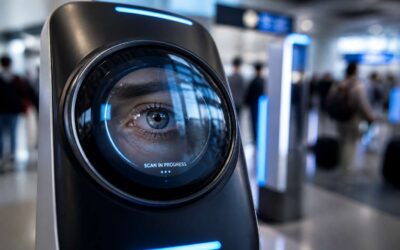
Among biometric modalities, iris and retina scans stand as crystal gates—precise, patient, almost mythic in their steadiness. Yet biometric security concerns cling to their elegance like dawn mist. A security architect whispers, “Eyes reveal trust and vulnerability in equal measure.” In South Africa’s bustling hubs, bright glare and aging optics test the resilience of even the sharpest sensors.
Threat profiles drift along several channels:
- Spoofing with high-resolution iris images, synthetic textures, or specialized contact lenses that fool sensors.
- Sensor quality gaps across devices and lighting that distort the subtle iris patterns.
- Covert enrollment or distracted capture when consent or attention is absent.
The layered approach—combining iris or retina modalities with robust liveness checks and cross-factor verification—helps keep biometric security concerns manageable, preserving trust while maintaining a smooth user journey.
Voice and behavioral biometrics limitations
Voice and behavioral biometrics feel intimate and practical—until they misbehave in a bustling South African office. Ambient noise can shave up to 30% off recognition accuracy, and shifts in mood or accent can turn a familiar voice into a riddle. As one security architect notes, “security is a conversation, not a gate.”
Limitations include:
- Ambient noise and microphone quality undermine voice-pattern reliability.
- Voice aging, illness, and dialect shifts disrupt consistency over time.
- Behavioral drift—changes in keystroke dynamics, gait, or gesture—frustrate baseline models.
- Enrollment across devices and platforms creates fragmented data that defies seamless verification.
- Privacy concerns around continuous monitoring and data retention color user trust.
To keep biometric security concerns manageable, layer voice and behavioral signals with cross-factor checks and privacy-by-design safeguards.
Privacy, data protection, and regulatory implications
Data minimization and storage policies
More than half of SA organisations admit biometric security concerns keep them awake at night, a hefty reminder that privacy and progress must share a stage. Biometric data sits at the crossroads of trust and technology, demanding a careful posture from leaders who dislike melodrama but love compliance.
Privacy, data protection, and regulatory implications under POPIA insist on data minimization and thoughtful storage policies. When biometrics travel through the cloud or a partner, lawful processing and clear purpose limitation are not optional; they are the price of admission to modern business.
Principles that quietly shape governance include:
- Sane data minimization and purpose limitation
- Secure, access-controlled storage with audit trails
- Transparent governance and documented retention norms
Navigating these currents with wit and prudence is how South African enterprises keep data governance from becoming a cautionary tale.
Regulatory frameworks and compliance requirements
In South Africa, biometric security concerns collide with the law, and that collision is sharpening rather than dimming the tools of progress. “Compliance isn’t a burden,” a privacy official might say, “it’s the permission slip to grow.” Under POPIA, lawful processing, purpose limitation, and security safeguards are not optional—they are the contract between trust and technology.
Regulatory frameworks turn ambition into accountability. When biometrics traverse cloud or partner ecosystems, data controllers face transparent retention norms, robust access controls, and clear data subject rights. The aim is to keep governance boringly effective: no mystery data, no leaky borders, no vague purposes.
- Lawful processing and purpose limitation under POPIA
- Secure storage with audit trails and access controls
- Clear cross-border transfer rules and retention norms
Ultimately, the legitimacy of biometric deployments rests on governance that can be seen, audited, and trusted—so that progress does not eclipse privacy.
Consent, transparency, and user rights
Privacy isn’t a luxury; it’s the air I breathe in a hallway of doors. biometric security concerns demand more than secrecy—they demand clarity. In South Africa’s data landscape, consent and purpose are not abstract boxes; they are the coordinates of trust between person and machine.
Consent, transparency, and user rights are not administrative afterthoughts; they are the living currency of biometric deployments.
- Access to stored data
- Correction of inaccuracies
- Erasure or withdrawal of consent
- Restriction or objection to processing
- Data portability to another provider
Regulatory implications push governance from aspiration to audit trail. POPIA sets lawful processing, purpose limitation, and security safeguards as the price of progress, especially where data traverses cloud and partner ecosystems. When governance is visible, data subjects recognize their rights, and trust remains intact.
Cross-border data transfers of biometric data
Biometric data travels like air between borders, and that scalability invites risk. “Privacy is not a hurdle; it’s the architecture,” a privacy advocate once observed, and these biometric security concerns demand clear governance, not secrecy. In South Africa, regulatory safeguards—including POPIA—must keep pace with cloud and partner ecosystems, demanding clarity on consent, purpose, and security for biometric data moved beyond national lines.
Cross-border transfers turn data governance from theory into practice. The following guardrails help keep biometric data safe across borders:
- Legal bases for transfer under POPIA and international frameworks
- Contractual safeguards with cloud providers and processors
- Auditable data handling, including access logs and governance trails
What matters is accountability and user rights following a transfer, ensuring data subject access and erasure rights are respected wherever the data resides, not just where it started.
Breach response and incident management for biometrics
Privacy, data protection, and regulatory implications form the living shield around biometric data. In South Africa, POPIA and a restless digital frontier demand clear consent, purpose limitation, and ironclad security as biometric information travels across cloud ecosystems. These biometric security concerns require governance that is transparent, auditable, and resilient—otherwise the data becomes a whispering myth instead of a trusted asset.
- Contain and isolate affected systems to prevent lateral movement and further exposure.
- Assess scope and impact, mapping data flows, access rights, and backups.
- Notify the Information Regulator and affected data subjects within required timelines, with clear remediation steps.
- Remediate gaps, strengthen controls, and document lessons learned for continuous improvement.
Accountability is the compass: after a transfer—or a breach—data subjects retain rights to access and erasure, and these rights must be honored wherever the data resides. A harmonized, auditable response builds trust across borders and with regulators.
Industry use cases and risk management
Financial services authentication risks
Across South Africa’s financial services landscape, biometrics move from curiosity to core defense, speeding legitimate access while challenging risk teams to stay ahead. The phrase biometric security concerns now informs design choices—from mobile banking apps to corporate portals—ensuring authentication remains seamless without becoming a backdoor for abuse.
- Mobile banking and agent-assisted onboarding that relies on biometrics rather than pin codes
- Remote access to enterprise systems with device-attested authentication tied to user context
- New digital channels that balance user convenience with risk-based checks and continuous verification
To manage risk, lenders implement layered controls, telemetry-driven anomaly detection, and governance around authentication events.
Healthcare access safeguards and patient privacy
Global healthcare breaches cost an average of about $9 million per incident, a figure that should jolt hospital boards in South Africa. Biometric security concerns push biometric solutions from novelty to necessity, shaping how patients are identified and how clinicians access records. In this context, patient safety and privacy go hand in hand with operational speed.
Industry use cases include patient identity at admission, clinician access to electronic health records, and secure telehealth workflows.
- Patient identity at admission
- Clinician access to electronic health records
- Telehealth device and session protection
Risk management rests on layered controls, telemetry-driven anomaly detection, and governance around authentication events. Context-aware access, continuous verification during sessions, and robust audit trails help keep patient privacy intact while preserving speed.
Public sector identity programs and oversight
Biometric security concerns are changing the balance of risk and speed in South Africa’s public and private sectors. A wave of credential-related incidents has pushed identity verification from afterthought to frontline necessity—shaping how people prove who they are and how systems decide what to reveal and permit.
Industry use cases illustrate where these measures matter most:
- Public sector identity programs for citizen services and welfare access
- Secure staff and contractor access to facilities and IT infrastructure
- Remote and telepresence workflows that rely on real-time, context-aware authentication
Risk management in this space combines layered controls with governance. Telemetry-driven anomaly detection, continuous verification during sessions, and robust audit trails are essential, and oversight bodies help keep public sector identity programs accountable while preserving user experience.
Enterprise security and user experience trade-offs
Sixty percent of modern breaches hinge on weak identity verification, a fact that keeps security teams awake. In South Africa, biometric security concerns shape the balance between enterprise protection and everyday usability—from frontline services to back-office access.
Industry use cases span manufacturing floor access, campus facilities, and remote IT support that must verify identity in real time.
- Manufacturing floor and warehouse access where verification gates ensure safe, compliant operations
- Campus facilities and research hubs where secure entry underpins collaboration
- Remote IT administration and vendor access to cloud resources with ongoing identity checks
Risk management hinges on balancing friction and security, governance and user empathy. Data-driven insights, clear audit trails, and context-aware policies guide when to challenge a user or grant seamless access. The whisper of biometric security concerns echoes in policy design, prompting guardians of data to pursue interoperability and privacy-aligned experiences.
Future-proofing biometric security
Anti-spoofing improvements and liveness testing
“Biometrics removed the password, but not the risk,” a security chief warned, and the sentiment sticks as we eye the future of authentication. In the years ahead, future-proofing biometric security means building anti-spoofing resilience and rigorous liveness testing that adapts to new threat vectors.
- Multi-layer checks, combining behavior, biometrics, and context to deter spoofing;
- Hardware-backed liveness proofing and continuous risk assessment to catch unusual access patterns.
Beyond software, governance and ethics shape the trajectory; keeping privacy at the center and aligning with POPIA-like standards in South Africa ensures biometric security concerns don’t overshadow rights. The goal is a seamless, trustworthy user experience that respects dignity and security.
Zero-trust integration with biometric systems
In a world where a single biometric breach can cascade through a business, 68% of South African firms view zero-trust as non-negotiable for biometric deployments. “Zero-trust is a posture, not a checkbox,” a security chief observes, and the sentiment underpins any future-proof strategy. biometric security concerns are real and evolving.
Zero-trust integration with biometric systems rests on several pillars:
- Context-aware authentication that continuously reevaluates user risk
- Hardware-backed attestation and encrypted biometric templates
We must balance privacy, governance, and user experience in SA, aligning with POPIA-like standards to preserve dignity while staying vigilant against threats. From my vantage, the future is a cautious, almost spectral blend of automation and oversight.
Privacy-preserving biometrics and on-device processing
Sixty-eight percent of South African firms see zero-trust as non-negotiable for biometric deployments—a stark reminder that future-proofing begins at the data edge. To address biometric security concerns, privacy-preserving biometrics and on-device processing offer a humane, effective path, keeping sensitive signals away from the cloud whenever possible. Hardware-backed attestation and encrypted templates anchor trust at the device level, reducing exposure while preserving user dignity and aligning with local governance norms.
- Edge processing with encrypted templates to minimize data transfer
- Hardware-backed attestation to confirm device integrity
- Privacy controls and auditability embedded at the source
The balance—automation tempered by oversight—feels almost spectral, a cautious insistence that security and humanity can coexist in a single biometric system.
Standards, interoperability, and governance
Future-proofing biometric security standards isn’t glamorous, but it’s essential. In South Africa’s evolving digital economy, interoperability and governance act as rails that keep biometric systems from deranging into chaos. The aim is seamless usage across sectors while respecting privacy; biometric security concerns stay manageable.
- Open, vendor-agnostic standards aligned with ISO and jointly governed audits
- Transparent governance with independent oversight and clear accountability
- Robust cross-border data controls and consent frameworks to protect individuals
A practical, humane approach blends policy with user-friendly design; trust comes from clarity, not clever code. Standards that scale with interoperation make life easier for security teams and users alike, keeping biometric deployments future-ready without snooping into every data point.


0 Comments