The Evolution of Vehicle Access Systems
The Rise of Biometric Verification
Roughly 60% of new vehicles sold today feature keyless entry, yet this convenience has become a vulnerability. Criminals can now amplify a fob’s signal from inside a house to unlock a car parked on the street. This robber’s trick, known as a relay attack, has forced the industry to rethink the physical key.
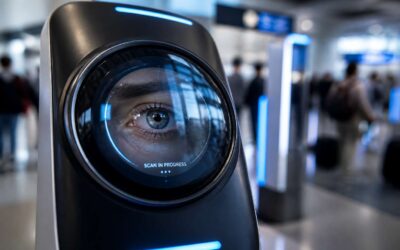
The next step beyond these fobs is biometric car security. Instead of relying on a token you carry, the vehicle now reads the driver. Fingerprint scanners on the start button are common, and some luxury models use iris recognition to adjust mirrors and seats before you even touch the door. Hyundai has already placed a fingerprint array on its Santa Fe, allowing the car to start without a key.
Other manufacturers are exploring deeper identity checks:
- Voice recognition for emergency system activation
- Heartbeat sensors embedded in the seatbelt
- Driver weight distribution mapping for theft prevention
These layers verify that the person inside is the owner, not just someone holding the right gadget. The transition from simple locks to biometric validation is not merely a feature addition. It is a fundamental change in the relationship between driver and machine. As this technology matures in South Africa, we can expect the traditional keychain to disappear entirely from the showroom floor.
Why Traditional Security Falls Short
Car keys have changed more in the last 30 years than in the previous century. The cut metal blade gave way to transponder chips, then rolling code remotes, then smartphone apps. With each change, we accepted a new trade off.
- Mechanical keys were easy to copy.
- Transponder chips added an electronic handshake, but thieves learned to override it.
- Keyless remotes replaced physical contact, yet their signals proved interceptable.
Each step improved convenience without solving the core flaw. Traditional security rests on possession. If you hold the key or fob, you hold access. That logic collapses when signals can be intercepted and replayed with cheap electronic tools. The asset is the object, not the person.
Biometric car security changes this relationship entirely. The vehicle no longer asks what you carry. It reads who you are. These are not minor upgrades, they are a genuine shift in how access is granted!
Core Biometric Technologies for Automobiles
Voice Recognition for Personalized Settings
According to a study, the average driver spends 18 hours a year fiddling with seat adjustments. Voice recognition eliminates this chore by learning your commands. In modern vehicles, this technology anchors biometric car security. It identifies you by vocal patterns, including cadence, pitch, and tone.
This allows the car to prepare your preferred cabin before you even reach for the door handle. The system remembers your unique speech quirks, like your tendency to pronounce ‘route’ as ‘root’. It then applies personalized settings for various elements. Here is what it can adjust on the fly:
- Seat position and lumbar support
- Steering wheel height and reach
- Ambient lighting and climate zones
- Audio presets and equalizer levels
Your voice becomes the key that unlocks a tailored driving experience while maintaining security.
Addressing Security and Privacy Concerns
Vulnerabilities in Biometric Data Storage
The 2023 FIDO Alliance study found that 67% of consumers worry their biometric data could be stolen. That fear is justified. Vehicle biometric databases, when poorly secured, become honeypots for cybercriminals. A fingerprint template, once extracted, cannot be revoked like a PIN code. It follows the owner forever.
Modern biometric car security systems mitigate this through on-device processing. The data never leaves the vehicle’s secure element. Some manufacturers employ homomorphic encryption, allowing authentication on encrypted data without exposing the raw template. I find that approach genuinely impressive.
- Storage location matters: local retention beats cloud transmission.
- Liveness detection prevents spoofing with a printed photo.
- Tamper-resistant hardware modules protect the encryption keys.
For South African drivers, the privacy conversation has shifted from whether biometrics work to how securely the data is stored. The weakest database determines the strength of the entire biometric car security system.
Spoofing and Liveness Detection Countermeasures
Your fingerprint is not a secret. You leave it on every steering wheel, coffee cup, and smartphone screen. That is why biometric car security relies on liveness detection, not just image matching. The sensor looks for proof of life: a pulse, a thermal gradient, or involuntary micro-twitches.
The countermeasures are practical. Ultrasonic sensors read the subdermal layer, making a paper print useless. Infrared cameras check that a face radiates heat, not pixels. Systems ask you to blink or turn your head, blocking video replay attacks. A severed finger fails the pulse test.
For South African drivers, this lowers the fear of spoofing. A thief needs your actual live body, not a stolen template.
Liveness detection countermeasures:
- Pulse oximetry in the fingerprint reader.
- 3D depth mapping of the face.
- Randomly generated challenges, like a head turn.
Biometric car security now forces a simple question: are you alive? That is harder to fake than any password.
Legal and Regulatory Compliance
South African drivers adopting biometric car security must confront POPIA compliance. The Protection of Personal Information Act classifies biometric data as special personal information. Processing it requires explicit, informed consent. This legal reality shapes how manufacturers design their systems.
The regulatory landscape is still maturing. The Information Regulator has issued guidance on biometric data handling. Vehicle manufacturers must demonstrate lawful processing. They need to show purpose limitation and storage limitation. Data minimisation is critical.
Consider what compliance demands:
- Clear consent mechanisms at point of sale
- Transparent data breach notification procedures
- Defined retention periods for biometric templates
- Cross-border data transfer safeguards
Biometric car security vendors face a dual burden. They must protect against theft while respecting data subject rights. The legal framework is not optional. It is a design constraint. We are seeing serious manufacturers treat it that way.
Consumer Privacy and Data Ownership
Biometric car security stores intimate personal data inside the vehicle, and this arrangement raises a pointed question: who actually owns that information? A driver’s face and fingerprints are not like a PIN code that can be reset at a bank branch. Once the templates are captured, the owner should know exactly where they reside. Many motorists sign finance agreements without realising that their biometric information may be accessible to credit providers or vehicle tracking companies. The boundary of ownership, then, becomes uncertain.
A clear data ownership clause in a purchase contract would distinguish between the physical vehicle and the digital identity inside it. Some manufacturers allow the owner to access, export, and erase their own templates after resale. Others do not. This disparity matters, especially when selling a used car, because biometric car security systems may keep the previous owner’s templates active.
Balancing User Convenience and Protection
South African drivers expect both convenience and safety from their vehicles. Biometric car security introduces a simple tension: how quickly should a car authenticate a driver versus how thoroughly should it verify them? A faster scan means less friction at the ignition. A more rigorous check offers stronger protection against theft.
One solution is layered authentication. The vehicle may require a fingerprint to unlock the door and a separate gesture to start the engine. Some systems let users adjust their own security thresholds through a mobile app, granting control without demanding technical expertise.
The real measure of success is whether drivers feel safe without feeling surveilled. That balance depends on transparent settings and honest communication from manufacturers.
Integrating Biometrics into the Connected Car Ecosystem
Biometric-Enabled Personalization and Infotainment
As vehicles connect to broader digital networks, authentication becomes the gateway to a personalised cockpit. Biometric car security no longer exists in isolation; it feeds directly into the vehicle’s operating system. Once the driver’s fingerprint or iris is confirmed, the connected ecosystem activates in a deliberate sequence. Seat geometry adjusts. Climate control calibrates to recorded preferences. Infotainment surfaces, pulling curated routes and playlists from previous journeys. Consider the flow:
– Driver profile loads within milliseconds of identity confirmation
– Preset navigation destinations appear based on time of day
– Media libraries sync across personal devices without prompting
Integration turns the vehicle from a passive machine into an active participant. For South African drivers, whether navigating Johannesburg traffic or the open roads of the Western Cape, this means the car adapts before a single command is spoken. Biometric car security thus extends beyond theft prevention, embedding the driver’s identity into every journey.
Adaptive Driver Monitoring for Safety
Most people think biometric car security exists purely to lock out criminals. Its harder task begins after the engine starts. Driver monitoring systems pair infrared cameras with steering wheel sensors to track eye movement, head position, and pulse. When fatigue takes hold, the car catches it before the driver does.
Recognised triggers include:
– Eyelid closure that outlasts a standard blink
– Head nods drifting from their neutral position
– Erratic steering inputs over sustained periods
– Heart rate variability that signals drowsiness
South African long-distance drivers face particular exposure on routes like the N1 between Johannesburg and Cape Town. Hours of straight highway, high temperatures, and constant speed create a trance state. Adaptive monitoring answers with a vibrating seat, dimmed lighting, or a prompt to rest.
The vehicle does not judge. It corrects. That distinction shapes how drivers accept biometric car security.
Biometrics as a Key for Ride-Sharing and Fleet Management
In the connected car ecosystem, biometric car security becomes a master key for shared mobility. Ride-sharing drivers in Johannesburg can start a trip only after a fingerprint scan, while the vehicle mirrors the driver’s saved seat position and climate settings. The same system verifies the passenger’s identity before the rear door unlocks, removing the guesswork from hailing a private car.
Fleet managers tracking delivery routes across Cape Town rely on the same biometric car security to confirm who is actually behind the wheel. Unauthorised journeys become impossible because the ignition refuses to cooperate with an unrecognised driver.
- Automatic driver assignment on shift start
- Tamper-proof digital trip logs
- Real-time identity checks at every stop
Access rights now travel with the person, not the key, and that changes how fleets measure accountability.
Integration with Smart Home and IoT Devices
Within a connected car ecosystem, biometric car security becomes the link between your vehicle and your home. Consider this: you finish a shift in Sandton, start your car with a fingerprint scan, and that action already tells your house to prepare. The same signal that authenticates you to the vehicle can communicate with your IoT hub, adjusting the indoor temperature and switching on the kettle before you arrive.
The practical uses multiply:
- Geofenced arrival triggers from the vehicle’s GPS
- Driver profile sync to home lighting and security cameras
- Biometric confirmation for parcel handoff with a delivery drone or courier
This integration creates a seamless chain of verified actions. Your car becomes a trusted node in a broader network, and the biometric car security check at the ignition carries that authority forward. For South African households juggling schedules and load shedding, this preemptive communication between car and home puts the convenience where it belongs.
Over-the-Air Updates and Security Patches
Biometric car security depends on software that never stops evolving. A fingerprint scanner is only as trustworthy as the code that runs it. Over-the-air updates let manufacturers patch flaws without requiring a workshop visit. This matters in South Africa, where distances make dealership trips inconvenient.
Security patches address emerging threats to biometric car security. They also refine algorithms, improving accuracy for skin tone variations and worn fingerprints. The connected car demands agility. A single update can close a vulnerability discovered after a hack overseas.
- Encrypted update channels verify the identity of the server
- Signed firmware ensures no tampering during transmission
- Rollback protection prevents downgrade attacks
Without those measures, the system remains vulnerable. Regular patches keep it secure over time. Manufacturers must balance rapid deployment against rigorous testing. A flawed update could lock drivers out, a risk no one accepts lightly.
The Role of Artificial Intelligence in Biometric Systems
A modern vehicle is a node in a network. It talks to infrastructure, other cars, and cloud services. Integrating biometric car security into that ecosystem takes more than bolting a sensor onto the door. The system must share context without exposing raw data.
Artificial intelligence drives that balance. An AI model watches how a driver grips the wheel, how often they glance at mirrors, and how they sit after a long trip. This behavioural baseline works with the fingerprint scan. It adds confidence when the signal is weak and flags anomalies when it is not.
The loop feeds itself. Each successful authentication sharpens the model. Frequent drivers gain faster recognition. New users, like a rental driver in Johannesburg, see the system adapt in real time. That is the system working as intended!


0 Comments