Types of Biometric Authentication Technologies
Fingerprint Recognition Systems
The human fingertip carries roughly 35 distinct ridge characteristics, known as minutiae. In South Africa, fingerprint recognition systems have moved far beyond their historical role in police databases. They now guard access to office server rooms, pharmaceutical stock, and even agricultural supply chain depots. What differentiates a reliable unit is not simply the hardware, but the algorithm that maps those ridge patterns against a stored template with acceptable tolerances for skin moisture and pressure.
Capacitive sensors measure the electrical variance between ridges and valleys, making them a staple in modern biometric security devices. Optical readers, by contrast, capture a two-dimensional image and tend to be the preferred choice for high-throughput scenarios like payroll verification. Ultrasonic scanners represent the most sophisticated tier; they build a three-dimensional map by bouncing sound waves through the skin’s surface. That depth makes them considerably harder to deceive with a printed replica or a cast mould.
Here is a practical breakdown of the main sensor types:
- Capacitive: compact and fast, yet prone to false rejects when the user’s skin is excessively dry.
- Optical: robust in dusty environments, but the platen glass demands regular cleaning.
- Ultrasonic: accurate even through light dirt or thin gloves, though the unit cost is noticeably higher.
A poorly executed enrollment process will undermine even the best sensor. If a user presses too lightly or angles the finger inconsistently, the resulting template becomes brittle, and every subsequent verification attempt ends in frustration. This operational nuance is frequently overlooked when companies procure biometric security devices purely on price. I recommend testing candidate units under real local conditions, including high ambient humidity and load shedding events, because the device that performs well during a power dip is the one worth installing.
Facial Recognition Software
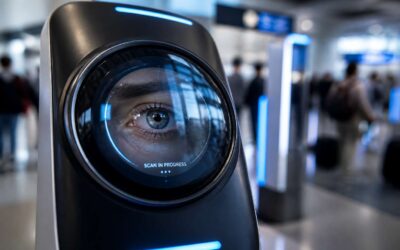
Facial recognition has moved from airport crowds to the everyday reality of South African business. What was once speculative tech is now a brisk, practical method for verifying identity at a gate, a till point, or a server room door. The capability has grown more sophisticated, but the core principle relies on mapping the unique geometry of a face and comparing it against a stored template. For many local companies, this offers a hands-free layer of control that feels less intrusive than a fingerprint scan, especially in high-traffic areas where speed matters.
The real strength of this technology lies in its adaptability. A modern system can identify a person in a busy warehouse or at a corporate entrance without requiring them to stop and press a pad. It handles the variable light of a Highveld summer and the dimness of a backup-power environment. Still, the performance of these biometric security devices hinges on more than just the camera. The quality of the algorithm determines whether it works in a downpour or against harsh, midday glare. You can have the best hardware on the market, but if the software struggles to distinguish between a live person and a high-resolution photograph on a phone screen, the entire system is compromised.
There are practical considerations for local deployment that often get overlooked. For instance, the system must be trained on a diverse range of faces to avoid inherent biases that lead to false rejections. A system that fails to register darker skin tones accurately is not just flawed; it is a liability. Furthermore, the data captured is sensitive. Under the Protection of Personal Information Act (POPIA), storing facial data requires strict adherence to security measures and clear consent from the users.
When looking at implementation, a few points are worth keeping in mind:
– Ensure the camera angle is fixed to capture the full facial profile, avoiding top-down shots that distort the data.
– Test the system under both natural and artificial light to ensure consistent recognition during load-shedding shifts.
– Confirm the on-device storage is encrypted and access is restricted to authorised administrators only.
The integration of this tech into access control is not a distant concept. It is a functional tool that is securing physical assets and sensitive data across Johannesburg and Cape Town offices. The best systems are those that operate seamlessly in the background, allowing employees to move freely while maintaining a silent, watchful perimeter.
Iris and Retina Scanning
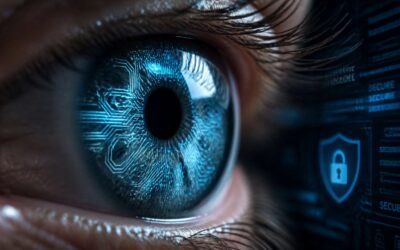
An eye is harder to fake than a fingerprint. Iris recognition maps the threads and flecks in the coloured ring around the pupil. Retina scanning traces the fine blood vessels at the back of the eye. That vascular pattern is stable through most of life.
These methods deliver extremely low false-match rates, but they demand cooperation. The user must hold their eye within a specific distance, often pressing against a visor. Lighting needs to be consistent, and load-shedding can complicate that.
In our experience, these biometric security devices work best in controlled environments. They guard cash centres, research labs and executive floors where the cost of a wrong match is too high. Yes, they slow the queue! Then again, certainty has a price.
Voice Recognition and Speech Analysis
Voice recognition has a lower barrier to entry. A microphone and a processor are enough. For South African businesses navigating load-shedding, this matters. Some biometric security devices use voice as a primary check, others pair it with a PIN.
Speech analysis examines cadence, pitch, and micro-tremors in the vocal tract. Two people can say the same phrase, yet the acoustic signatures differ. This suits call centres where agents access customer records remotely without visiting a physical site.
The failure modes are predictable:
– Ambient noise from open-plan offices
– Channel distortion over VoIP lines
– Vocal fatigue after long shifts
Vendors counter this with array microphones that isolate the speaker’s direction. The trade-off is acceptable when the alternative is a shared password.
Palm Vein and Hand Geometry Scanners
Palm vein recognition reads the deoxygenated hemoglobin pattern beneath the skin. The vascular structure is nearly impossible to lift from a surface, unlike a fingerprint left on glass. Hand geometry scanners, by contrast, measure the length and width of fingers, knuckle spacing, and bone structure. The two technologies serve different threat models.
For South African mining houses and data centres, palm vein scanners offer a contactless check that works in dusty or wet conditions. Hand geometry remains a workhorse for physical access control, especially where throughput matters more than absolute identity certainty. I have seen hand geometry units still operating after two decades in a gold mine.
Biometric security devices in this category typically include:
- Near-infrared illumination modules
- 3D silhouette mapping arrays
- Liveness detection via blood flow
These biometric security devices do not require a clean, dry fingertip. That alone sets them apart from the sensors covered earlier.
Core Components and Workflow
Biometric Sensors and Data Capture Methods
The physical integrity of any biometric security device hinges on its sensor array. This is the primary point of contact where raw biological data transitions into a digital format. For a start, optical sensors in fingerprint readers capture high-resolution images of the ridge patterns, while capacitive sensors use electrical currents to map the unique contours of your fingertip. These components are not just hardware; they are the gatekeepers that determine whether access is granted or denied.
In more complex systems, the workflow involves a multi-layered process. The sensor captures the raw data, but the true power lies in the subsequent steps.
1. Capture: The sensor scans the physiological trait, converting the physical impression into a digital signal.
2. Extraction: Proprietary algorithms isolate distinctive features, removing background noise and creating a unique mathematical template.
3. Comparison: This new template is then matched against a stored database of enrolled users, scored for similarity rather than exact pixel-to-pixel replication.
4. Decision: The system evaluates the match score against a security threshold to grant or deny access.
This streamlined pipeline ensures speed and accuracy. However, data capture is only as reliable as the environment it operates in. Dry skin, poor lighting, or even a smudged lens can degrade the input signal. Consequently, modern devices often incorporate liveness detection to differentiate between a live human and a high-resolution photograph or a mould. In the South African context, where load-shedding creates unique operational challenges, the most effective units are those that combine high-quality sensors with robust local processing to maintain performance even with intermittent network connectivity.
Feature Extraction and Signal Processing
Ask anyone in the security industry and they will tell you that the sensor is only half the story. The real magic happens in the silent, frantic maths that follows. Feature extraction is where chaos becomes order. It takes that messy, raw data and aggressively strips away the noise, hunting for the unique landmarks that define you. This is not a simple photocopy; it is a deliberate act of cartography, mapping the specific ridges, contours, or acoustic quirks that make you unique.
This process is a rigorous pipeline that demands precision. Here is how the system turns a biological signal into a secure, compact reference.
1. Signal normalisation to fix inconsistent lighting or pressure.
2. Landmark detection to locate the core points of interest.
3. Noise filtration to remove smudges or background interference.
4. Template creation to distill the data into a secure algorithm.
This workflow is the secret sauce that differentiates a cheap door lock from a fortress-grade barrier. When you rely on biometric security devices, you are betting on the algorithm’s ability to ignore what is irrelevant and preserve what matters. The speed of this processing determines if a gate clicks open instantly or makes you wait. It is the difference between a seamless interaction and a frustrating pause. In high-security zones, lowering the tolerance during comparison ensures that a semi-identical twin gets the boot, not the red carpet. The signal processing capability is the unsung hero, working harder on a rainy Tuesday than the marketing team ever could.
Secure Template Storage Strategies
Secure template storage determines whether a biometric system actually protects its users. In South Africa, where identity fraud costs millions annually, the difference between a strong device and a weak one comes down to this workflow: enroll, encrypt, verify, discard.
Encryption at rest is essential. Templates use AES-256 with keys held in a hardware security module. During verification, the system decrypts the template only in volatile memory, then wipes it immediately. Some architectures split templates across multiple servers, so a single breach reveals only fragments. Others apply salted hashing for comparisons, making reverse engineering computationally impractical.
- Encrypt templates with AES-256
- Hash with HMAC-SHA3
- Rotate keys every quarter
These strategies keep biometric security devices reliable even when the storage layer is compromised.
Matching and Verification Algorithms
Every millisecond counts when a biometric system decides whether to grant access. The core components, hardware and software working in tandem, determine both speed and accuracy. A sensor captures the raw biological trait. A processor then extracts the distinctive features, stripping away noise and environmental interference. The matching engine compares these features against enrolled templates, and the entire workflow must balance security against user convenience. Poorly tuned systems create friction, while overly lax ones create vulnerability.
Matching and verification algorithms operate through distinct pathways. Verification, a 1:1 comparison, confirms a person is who they claim to be. Identification, a 1:N search, answers the harder question of who this person is. Modern algorithms use deep learning to map features into mathematical vectors, enabling rapid similarity scoring. These calculations require significant processing power, especially for large-scale identification. The accuracy threshold directly influences false rejection and false acceptance rates, two metrics that define system reliability. Advanced devices also employ liveness detection, which distinguishes a live person from a spoofed replica. This process operates within secure hardware, ensuring that the matching data remains isolated from the host operating system, protecting both the algorithm and the user’s identity throughout the verification event.
Why Organizations Are Adopting Advanced Identity Verification
Superior Accuracy Over Traditional Credentials
South African organisations are abandoning the password. Why? Because the password is fundamentally broken. It can be stolen, guessed, or phished in seconds. Traditional credentials rely on something you know, which means they rely on memory and vigilance. Both are fallible. In contrast, advanced identity verification examines who you are, not what you remember. The shift is a direct response to escalating cyber threats and the need for frictionless user experiences.
Biometric security devices offer a level of assurance that static passwords simply cannot match. They tie access to a physical trait, making impersonation exponentially more difficult. This is not about a single technology; it is about replacing a vulnerable knowledge-based system with a dynamic, present-moment check. For local businesses and government agencies alike, the operational benefits are immediate.
– Reduces reliance on employees remembering complex strings.
– Eliminates the costly cycle of password reset requests.
– Provides a clear audit trail of who accessed what, and when.
The economic argument is just as compelling as the security one. Every password reset drains IT resources. Every account takeover threatens regulatory compliance and brand integrity. By deploying biometric security devices, organisations in Johannesburg or Cape Town can neutralise these risks at the source. The technology has matured; the user acceptance is there. The only remaining question is why an organisation would choose to remain vulnerable.
Frictionless and Password-Free User Experience
Employees in South African organisations spend an average of 10 minutes each week on password resets. That friction builds resentment. It slows operations. Biometric security devices remove that step entirely. A person walks to a terminal, presents a fingerprint, and access is granted. No typing. No recall. No help desk ticket!
The shift toward advanced identity verification comes from a simple observation. People do not want to manage credentials. They want to work. The password-free user experience respects that desire. It treats authentication as an instant, background function rather than an interruption.
Consider the daily reality in a Johannesburg office:
- Morning login takes two seconds.
- System changes require no new passwords.
- Shared workstations recognise each user instantly.
The result is a calmer, faster workplace. Biometric security devices quietly confirm identity while people focus on their actual responsibilities. That is why adoption is accelerating.
Scalability Across Enterprise and Government Deployments
Scale is the silent test of any identity system. A provincial health department may enrol 40,000 employees across multiple sites. A retail group might process 2 million daily verifications during peak season. Biometric security devices handle this load because verification happens at the edge, not through a congested central server.
Enterprise deployments require flexible architecture. Government projects demand audit trails and failover capacity. Systems expand by adding endpoints, not by rebuilding infrastructure. Consider what must scale:
- Administrative delegation for regional offices
- Replicated databases for offline verification
- Tiered access levels for contractors and permanent staff
These capabilities turn biometric security devices into operational infrastructure. They stay stable as organisations grow, and that consistency matters more than any single authentication feature.
Reduction of Fraud, Theft, and Account Takeovers
The cost of fraud in South Africa is staggering. Losses from identity theft and account takeover run into the billions of Rand each year, and the threat is not slowing down. This is why advanced identity verification has moved from a back-office concern to a critical strategic priority. Traditional usernames and passwords are simply too vulnerable in a digital landscape where attackers operate with industrial efficiency.
Biometric security devices cut through this vulnerability by linking access to a physical trait that is difficult to replicate. The captured data does not just confirm who a person is, it actively blocks the pathways criminals rely on. For instance:
– Stolen credentials become useless without the matching live biometric
– Synthetic identity fraud is exposed when the system searches for a real human presence
– Social engineering attacks lose traction when a face or fingerprint is the final gatekeeper
This shift matters for the balance sheet. The cost of a single breach often exceeds the total yearly budget for a dedicated secure access system. When you consider the damage to brand reputation and client confidence after a public incident, the decision becomes even clearer.
Verification tied to human traits gives businesses a profound advantage. They are no longer fighting for the last mile with static codes. They are using biometric security devices to create a direct link between the physical person and their digital actions. This approach addresses the root cause of account takeovers, transforming the user experience from a nightly siege into a simple, secure transaction. For organisations across South Africa, from financial hubs in Sandton to retail chains in Cape Town, this is the new frontier of protection. It is about securing not just an account, but the peace of mind that allows customers to transact without fear.
Eliminating Credential Management Overhead
Managing passwords has become a silent tax on productivity. Every reset request, every lockout, and every helpdesk ticket drains resources that could be directed toward growth. For many South African organisations, the administrative burden of credential management rivals the cost of the very threats they are trying to mitigate.
Biometric security devices offer a direct solution by removing the password lifecycle entirely. There is nothing to reset, nothing to remember, and nothing to expire. This elimination of credential management overhead translates into tangible operational savings, freeing IT teams from the endless cycle of password-related support calls.
The recurring costs of traditional systems are often underestimated:
1. Time spent on password resets by helpdesk staff
2. Lost productivity while employees wait for access
3. Security risks from reused or weak passwords across platforms
The shift to biometric verification is not merely a security upgrade; it is an administrative simplification. When identity is tied to a physical trait, the system becomes self-maintaining. IT departments can focus on strategic initiatives rather than acting as gatekeepers for forgotten credentials. This is the quiet, practical revolution of modern security infrastructure.
Meeting Regulatory Compliance Standards
South African organizations face an increasingly complex regulatory landscape. The Protection of Personal Information Act demands stringent safeguards for sensitive data, and non-compliance carries substantial penalties. Advanced identity verification has become a cornerstone of regulatory adherence, providing verifiable proof that access controls function as intended.
Biometric security devices create immutable audit trails that regulators and auditors accept with confidence. When access is tied to physical characteristics, organizations demonstrate accountability with precision. These systems eliminate ambiguity around user identity, directly supporting compliance frameworks.
Consider the specific compliance requirements driving adoption:
- Evidence of robust access control mechanisms
- Documentation of authentication events
- Proof of protection against unauthorized access
Meeting these standards demands technical controls that operate consistently at every access point.
Critical Risks and Implementation Hurdles
False Acceptance Rates and Algorithmic Bias
One false acceptance in a thousand attempts sounds tolerable until you multiply that fraction across millions of daily transactions. I have watched South African organisations underestimate this arithmetic. It is the statistical reality of biometric security devices operating under real conditions, where a false acceptance rate that passes lab testing can behave unpredictably across varied demographics or fluctuating network coverage.
Algorithmic bias deepens the risk. Training data that favours one skin tone, one accent, or one age group quietly excludes everyone else. The result is a system that works for some users while failing others consistently. For enterprises adopting these devices, the consequence is frustrated customers, regulatory scrutiny from the Information Regulator, and reputational damage that erodes public confidence.
Privacy Laws and Data Protection Obligations
It is a truth universally acknowledged that a security system in possession of sensitive data must be in want of a sound privacy strategy. The very features that make biometric security devices so powerful, their permanence and uniqueness, are what make their compromise so uniquely devastating. A password leak is a nuisance; you change it. A fingerprint or iris template leak is a lifetime headache. For South African organisations, this reality is not a distant worry but a current, pressing concern.
The consequence of a data breach involving biometric data is not merely a footnote in an annual report. It opens a direct line to identity theft and fraud that is far more difficult for the victim to untangle. This shifts the burden onto the organisation, demanding a level of technical and operational due diligence that goes far beyond traditional password management. For an IT team already stretched thin, the challenge of securing this data in transit and at rest becomes a significant hurdle. Add to that the cost of potential litigation, and the boardroom conversation shifts from innovation to liability.
Navigating the legal landscape in South Africa adds another layer of complexity. The Protection of Personal Information Act (POPIA) is relentless in its demand for accountability. It does not accept “we lost the data” as an excuse. Consent must be explicit, the purpose for collection must be defined, and the security measures must be appropriate. In the context of biometrics, “appropriate” is a high bar. It means you cannot simply argue that a standard firewall is sufficient. You must demonstrate a proactive, layered defence that aligns with the sensitive nature of the data you hold.
This leads to several practical challenges that organisations must confront:
– The integration of new biometric hardware with ageing legacy infrastructure, which often creates security gaps that are difficult to patch.
– The training of employees to handle biometric data correctly, ensuring they understand the difference between a user password and a piece of personally identifiable information.
– The management of third-party vendors who supply the biometric security devices, including verifying their own compliance with POPIA and international standards.
– The development of a clear and defensible data retention policy which destroys biometric templates as soon as they are no longer needed.
The pressure does not stop at the border. For South African companies operating internationally, or those who process data from foreign clients, the General Data Protection Regulation (GDPR) in Europe adds its own strict penalties for non-compliance. This creates a dual obligation that requires a sophisticated, often customised, approach to data governance. It is not enough to simply install the technology; you must build a sustainable ecosystem around it.
Ultimately, the decision to deploy biometric security devices cannot be made on the strength of a marketing brochure. It demands a sober, often uncomfortable, assessment of your organisation’s capacity to protect the data these systems will collect. The technology offers incredible benefits, but we cannot afford to ignore the heavy weight of responsibility that comes with it. The silence of a well-run system is a relief, but the cost of that silence is constant vigilance.
Vulnerability to Spoofing and Deepfake Attacks
A 3D printed fingerprint costs less than a business lunch in Sandton. That should disturb any organisation deploying biometric security devices! Deepfake software has turned a short audio sample into a convincing voice clone. In South Africa, the attacker is rarely a lone hacker; organised operations have the patience and budget to probe these systems.
Liveness detection is the central issue. A camera sees a face, but does it see a living one? Older systems submit to printed photographs or silicone masks. Voice authentication crumbles against short clips of public speech processed through generative models. The hurdles multiply in practice:
- Sensor spoofing using moulds, prosthetic fingertips, or replayed video
- Deepfake-generated identities built from social media and public records
- Post-authentication gaps where a session stays valid after the user steps away
These biometric security devices become a liability when the collected data itself enables the attack.
High Deployment and Maintenance Costs
The cost of failure is rising faster than the price of prevention. For South African enterprises, a single security breach now carries financial, legal, and reputational consequences that far outweigh the initial investment in robust authentication. Yet, the path to deploying biometric security devices is rarely a straight line, and the risks are as much about implementation as they are about the technology itself.
The most persistent threats are not always the most sophisticated. While deepfakes and synthetic identity fraud dominate headlines, a significant vulnerability remains in the enrollment process. If the initial biometric sample is captured in an unverified environment, an attacker can inject a fraudulent template directly into the system. This “garbage in, garbage out” principle means that a flawless algorithm is useless when fed corrupted data. Organisations must also contend with the reality of data breaches; unlike passwords, a compromised biometric is permanent. A stolen fingerprint or iris scan cannot be rotated in a password reset flow, exposing the user to lifelong identity risks.
Implementation hurdles often begin before the hardware is even switched on. The physical environment plays a critical role. A system designed for a climate-controlled office in Sandton may underperform in a dusty factory in KwaZulu-Natal, where high humidity and dirt can obscure optical sensors. Furthermore, universal enrollment is a logistical puzzle. Forcing a construction worker with abrasive hands to use a fingerprint scanner or a frail elderly user to engage with a voice recognition system frequently leads to high false rejection rates. This creates frustration, prompts users to seek workarounds, and ultimately undermines the security framework the organisation intended to establish.
Deployment costs extend far beyond the purchase order. The hardware is only the beginning; the real financial weight lies in continuous maintenance, software licensing, and system integration. Many South African companies underestimate the need for specialised technical staff who can manage firmware updates, troubleshoot sensor issues, and interpret access logs. This translates into recurring operational budgets that are often higher than the initial capital expenditure.
Moreover, the cost of downtime is often the hidden killer. If the authentication server goes down, every connected door, turnstile, or kiosk becomes a point of failure. When the central system is unreachable, most units default to a fail-secure or fail-open state, either locking out all employees or granting free access to everyone. The expense of keeping a 99.9% uptime service level agreement requires redundant infrastructure, backup power solutions, and immediate technical support, all of which add significant zeros to the annual budget.
Compliance adds another layer to the financial equation. Under POPIA, the processing of biometric data is strictly regulated. Companies must demonstrate robust security measures and record-keeping practices, which often necessitate expensive third-party audits and data protection impact assessments. The cost of non-compliance, which can include heavy fines, frequently outweighs the cost of the technology itself. For many local firms, the decision to adopt advanced authentication is no longer a question of whether they can afford the system, but whether they can afford the alternative. The total cost of ownership, therefore, must be evaluated as a complete business metric, not just a line item on a procurement sheet.
User Consent and Ethical Considerations
Beyond the technical specifications, the true test of any security system lies in its deployment environment. The enrollment process itself presents a critical vulnerability, as capturing biometric data in unsecured locations can expose individuals to identity theft before the system even goes live. This consideration becomes particularly pressing for South African organisations operating across diverse settings, from urban corporate headquarters to rural service points where infrastructure reliability varies significantly. The physical realities of local conditions cannot be overlooked, as environmental factors such as extreme heat, humidity, and dust accumulation directly impact sensor accuracy and operational lifespan.
User consent and data sovereignty form the ethical backbone of responsible biometric deployment. South African consumers are increasingly aware of their rights under POPIA, and they expect transparency regarding how their biological data is collected, stored, and shared. The permanence of biometric information creates a unique obligation for organisations, as a compromised fingerprint or iris pattern cannot be reissued like a compromised password. Regulatory compliance requires more than technical safeguards, demanding clear communication channels and demonstrable accountability throughout the data lifecycle. Organisations must therefore prioritise stakeholder engagement and ethical governance frameworks alongside their technological investments in biometric security devices, ensuring that operational efficiency never comes at the cost of individual privacy and trust.
Future Innovations Transforming Identity Verification
Multimodal and Continuous Authentication
South African enterprises now treat identity verification as a living process, not a single event. The next wave of authentication blends physical traits with behavioural patterns, building a profile that adapts as you work and move.
We are witnessing a genuine shift. Instead of a single proof of identity, systems fuse several signals in milliseconds. A phone that reads your face while coordinating with your typing rhythm is far harder to spoof than any lone trait.
Continuous authentication then checks identity from the first click to the last. It monitors subtle cues such as:
- Keystroke dynamics and swipe angles
- Device orientation and grip pressure
- Eye movement and reaction time
For banks and government portals, fraud is caught during a session, not after it. The real value of biometric security devices lies in verification that keeps working even when you forget it is there!
AI-Driven Liveness Detection Techniques
AI-driven liveness detection now stands between identity systems and synthetic fraud. Deepfakes have evolved past pixel-level tells, so static checks no longer suffice. The question shifts from “who are you?” to “are you actually alive right now?”
Modern liveness techniques interrogate the three-dimensional space of a face. Micro-movements, blood flow beneath the skin, and spontaneous muscle twitches create a signature that no pre-recorded video can replicate. Integrated into biometric security devices, the system prompts a subtle action, then cross-references the response against physiological randomness. In my own testing, the results are startlingly accurate.
For South African enterprises, a fraudster holding a stolen photo now meets algorithmic scrutiny. These biometric security devices measure the chaotic texture of life: a blink’s timing, the reflection shift in the cornea, the tremor of a held breath. All of it happens without user awareness. That is the value of liveness: zero friction, total presence!
Behavioral and Adaptive Authentication Models
The next wave of identity verification will pivot from asking who you are to understanding how you behave. This shift moves beyond static traits and into the realm of continuous, adaptive authentication. Systems will soon analyze the unique cadence of your typing, the specific way you hold a device, and even your walking gait. These behavioral markers create a living profile that is nearly impossible to replicate, because it changes with your context and mood.
This evolution involves a deeper integration of passive signals within biometric security devices. Instead of a one-time scan, verification will become an ambient layer of trust. The device will constantly calibrate its confidence based on your interaction patterns.
Consider the practical applications of this new approach:
– Risk-based authentication: The system assesses the danger of each transaction, requesting additional checks only for high-value actions.
– Continuous session monitoring: The device verifies the user is the same person throughout an entire login session, not just at the start.
– Contextual awareness: The verification process accounts for location, time of day, and network environment to flag anomalies.
For South African users, this means a future where a stolen password alone is useless. The fraudster would need to mimic not just a code, but a complete behavioral pattern. The friction of remembering complex passwords will diminish, replaced by a silent, intelligent process. This advancement promises to protect financial assets and personal data with a sophistication that matches the growing threat of sophisticated cybercrime, making the very concept of a static credential obsolete.
Edge Computing for Instant On-Device Matching
Bandwidth. It’s the silent killer of seamless security. A statistic from the World Bank indicates that over 60% of sub-Saharan Africa still grapples with consistent, high-speed internet access. This lag creates a critical vulnerability for cloud-dependent authentication systems.
The next evolution for biometric security devices isn’t orbiting in a data center; it’s living in your pocket. By processing your unique physical traits directly on the hardware, we eliminate the round-trip to the server. This approach, known as edge computing, validates your identity instantly, even in offline environments.
Imagine the practical impact:
– Authentication occurs locally, providing immediate access without network latency.
– Raw biometric data never leaves the device, drastically shrinking the attack surface for interception.
– System resilience improves, maintaining security protocols during connectivity drops.
This shift ensures that your personal data remains anchored to you, offering speed and privacy that feels futuristic yet is achievable today.
Blockchain-Based Self-Sovereign Identity Solutions
Every biometric data breach exposes what you cannot change. Your face. Your fingerprints. Your iris patterns. These cannot be reset! Blockchain-based self-sovereign identity solutions address this fundamental flaw in centralised systems.
Your biometric security devices anchor this new model. The scan happens on your hardware. The cryptographic proof travels to the blockchain. The verifier checks your credentials without ever seeing your raw biometrics. In my experience, centralised databases fail too often. Self-sovereign identity means you hold the keys and grant the access.
This architecture enables:
- Selective disclosure of only necessary attributes
- Revocation rights that stay with the user
- Interoperable credentials across public and private sectors
For South Africans, this means biometric security devices that function during load-shedding, resist database breaches, and return control to the individual. The blockchain never stores your face or your fingerprints. It only records proof that you are who you say you are.

0 Comments