Understanding Biometric Security Devices
Definition and core purpose
Security that knows you by fingerprint, iris, or even heartbeat—the question of what is a biometric security device is best answered by calling it a digital doorman that recognizes you, no password required! In South Africa’s bustling offices, this tech promises smoother entry and sharper privacy safeguards.
At its core, a biometric security device verifies identity by measuring unique biological traits and matching them to on-file templates. It reduces reliance on shared tokens, speeds up entry, and helps build an audit trail that even auditors applaud. Liveness checks deter fake reproductions; in practice, this means fewer re-entries and more confident access decisions!
- Biometric modalities such as fingerprint, iris, facial recognition
- Anti-spoofing and liveness detection
- Privacy-preserving enrollment and data minimization
Designed for enterprise and consumer use, it’s all about seamless security without sweating the passcodes.
How biometric data works
In a world where a touch can replace a password, entry to a busy South African office should feel almost effortless. So, what is a biometric security device? It’s a living gatekeeper—recognising you by a fingerprint, iris, or even a heartbeat, with no password to remember and no keys to carry.
Biometric data works by capturing a unique trait, turning it into a mathematical template stored securely, then comparing future readings to that template. It’s fast, private by design, and resilient to ordinary variations like a warm handshake. The result is a smooth passage that respects your identity more than a badge.
To protect this trust, modern devices use liveness checks and anti-spoofing to stop fake samples. Enrollment is privacy-conscious, often on-device with strong encryption so only the necessary pattern is retained. Whether in a bustling city office or a rural cooperative, the principle stays the same.
Key benefits for security
In the South African workplace, time is money and efficiency matters. When considering what is a biometric security device, you’re looking at a living gatekeeper that links access to you—not to a badge. It’s fast, dependable, and hard to copy!
Key benefits for security start with privacy by design and a simple user experience. The system reduces password fatigue, strengthens identity binding, and delivers a clear audit trail. The result is fewer security gaps and smoother flows for teams on tight deadlines.
- Frictionless entry with strong identity binding
- On-device processing preserves privacy
- Robust anti-spoofing and liveness checks
From the busy streets of Johannesburg to rural co-ops, these devices fit any setting. They tighten access control without slowing people down, and they simplify compliance with local data rules while keeping templates safe on-device.
Real-world use cases
Understanding what is a biometric security device reveals more than gadgets—it reveals a trusted routine. In South Africa’s mixed urban and rural landscapes, biometric devices have moved beyond novelty to everyday guardians of space. They recognize a person, not a badge, and that distinction reshapes how a building breathes, from Johannesburg offices to rural co-ops, how quickly teams assemble, and how sensitive spaces stay secure without turning people away!
Real-world use cases illustrate the elegance and grit of this technology. Consider:
- Corporate campuses and controlled entrances
- Mining and industrial sites demanding rugged reliability
- Healthcare facilities protecting patient data
- Educational institutions managing attendance and access
Common Biometric Modalities and How They Work
Fingerprint recognition basics
Touch is the new password, a whispered verification without typing. what is a biometric security device? It’s a system that confirms identity through the body’s unique signals, not a password. Fingerprint recognition, in particular, turns a fingertip into a trusted key, mapping ridges and minutiae into a compact template.
Common modalities extend beyond fingerprints to eyes, voices, and veins.
- Facial recognition
- Iris recognition
- Vein pattern recognition
Fingerprint recognition basics hinge on capture, feature extraction, and matching. The sensor translates ridges into a compact template and compares it to a stored reference. Technologies vary—optical, capacitive, or ultrasonic—each balancing speed with spoof resistance. In South Africa, this enhances secure access across devices and workplaces!
Facial recognition basics
Your face is the new password—no typing, just a glance that grants access. A quick primer on what is a biometric security device reveals it’s a system that confirms identity through the body’s signals, not a password. It’s security with a dash of human fingerprint swagger, a modern gatekeeper for busy workplaces.
Facial recognition basics hinge on three steps: detection, feature extraction, and matching. A camera captures a face, maps landmarks, and converts those features into a compact template stored for comparison. Technologies vary—2D optics, 3D depth, even thermal cues—balancing speed with spoof resistance. This is how it answers what is a biometric security device in practice.
- Facial recognition
- Iris recognition
- Vein pattern recognition
Across South Africa, these modalities are reshaping secure access in offices, hospitals, and hospitality, providing smarter, less fiddly security that still keeps the bad guys at bay.
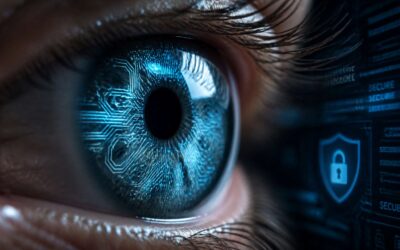
Iris and retina scanning basics
A single blink can unlock a door in microseconds, and it never forgets. Knowing what is a biometric security device helps teams appreciate why iris and retina scanning are among the sharpest tools in modern access control. Iris recognition reads the colored ring around the pupil, using near-infrared light to map stable patterns. Retina scanning maps the network of blood vessels at the back of the eye, producing a unique template that’s highly resistant to spoofing.
- Iris recognition: quick, contactless, and forgiving of lighting changes.
- Retina scanning: top-tier accuracy and resilience, often deployed where the highest security is required.
In South Africa, these modalities align with hygiene goals in offices and clinics, keeping entry smooth and secure without contact.
Palm geometry and voice recognition
In the theater of access control, palm geometry and voice recognition stride onto the stage with quiet confidence. Curious minds ask, what is a biometric security device, and the answer sits in the details of daily life: a hand’s silhouette and palm lines map identity, while voice cadence and timbre do the same with sound. Palm geometry offers rapid reads; voice recognition adapts to bustling offices and still keeps pace in a quiet lobby corner. In South Africa, these modalities align with hygiene goals by minimizing contact.
Here’s how they stack up in practical terms:
- Palm geometry reads the hand’s silhouette and palm lines; fast and repeatable, though it often requires a light touch.
- Voice recognition analyzes timbre and cadence; convenient for hands-free entry but sensitive to background noise.
Architecture and Components of a Biometric Security Device
Sensors and capture hardware
Biometric architecture isn’t a single gadget; it’s a layered system. What is a biometric security device? It translates a live signal into a trusted decision, balancing privacy with speed. The flow from capture to match is guarded by design—signals travel through a secure path, are reduced into a protected template, and never expose raw data.
- Optical and capacitive fingerprint sensing
- IR and multi‑spectral iris capture
- High‑clarity cameras for facial input
- Voice capture via microphone arrays
Behind this sits a resilient processor, a secure element, and a bound template store that keeps matches private. South African deployments must align with POPIA and industry standards, turning privacy into practice rather than promise.
In short, the architecture is a moral contract as much as a machine: it seeks speed, yet insists on tamper‑resistance and humane data stewardship for every user.
Feature extraction and matching algorithms
What is a biometric security device? A layered custodian of trust, it converts a live signal into a decisive verdict. Architecture guides the journey from capture to decision, guarding each step through a sealed path, a protected template, and tamper‑resistant logic that keeps raw data out of reach, while speed remains a virtue.
- Feature extraction and signature generation turn raw signals into compact, discriminative features.
- Matching algorithms compare those features against a bound template store with calibrated thresholds.
- Anti-spoofing and liveness checks keep the process resilient against deception.
- The secure element and tamper-resistant storage bind templates to the device and user, protecting privacy.
In practice, the architecture intertwines speed with safeguards, pairing a resilient processor with a bound template store and a dedicated secure element. It embraces humane data stewardship, reflecting how contemporary ecosystems in South Africa weave privacy into everyday security.
Storage and cryptographic protection
In answer to what is a biometric security device, the architecture unfolds as a patient, watchful vault. Storage and cryptographic protection guard each identity artifact—from template to verdict—while the heart beats inside a secure element, a sentinel against tampering. Data moves through a sealed path, bound to its owner, and erased in triumph, not fear. In South Africa’s privacy-forward landscape, it’s more covenant than circuit.
- Secure element for cryptographic operations, isolating keys from the main brain
- Tamper-resistant storage that binds templates to device and user
- Encrypted templates with robust key management to keep raw data out of reach
Together, storage and cryptographic protection choreograph a swift, trustworthy flow—capture, verify, decide—while lifecycle protections guard updates and revocation. The architecture marries a resilient processor with a bound template store and anti-tamper logic, delivering humane data stewardship in a land where security and privacy walk hand in hand!
Privacy and data security considerations
Architecture and Components of a biometric security device read like a disciplined theatre; nothing dramatic, everything purposeful. A dedicated secure element carries out cryptographic duties, keeping keys off the main brain. A tamper-resistant storage binds templates to device and user, while a sealed data path escorts capture, comparison, and verdict without leakage.
- Isolated cryptographic module protecting keys
- Tamper-resistant template binding to user
- Lifecycle-aware templates and secure revocation
Privacy and data security considerations for South Africa’s privacy-forward landscape lean on POPIA, privacy-by-design, and purpose limitation. Data minimization, clear retention rules, and auditable updates ensure accountability. Erasure of raw data after use, local processing, and restricted cloud exposure keep the system humane and trustworthy, because in this landscape what is a biometric security device matters most when ethics guard the gates.
Deployment Scenarios and Industry Applications
Office access control and physical security
Identity is the new door, and in South Africa’s buzzing offices, security teams ask: what is a biometric security device? The answer is a precise blend of identity verification and controlled thresholds, ideal for office access control and physical security. Biometric readers replace keys and cards while delivering an audit trail that supports compliance and smooth workflow.
- Corporate office campuses and high-traffic lobbies
- Government and municipal facilities
- Hospitals and clinics
- Universities and campuses
- Factories and logistics hubs
In industry applications across SA, these deployments pair with video surveillance and visitor management to strengthen security without slowing people down. By choosing rugged sensors and integration-ready software, offices stay productive while doors stay firmly shut to unauthorized entry.
Mobile device integration and consumer devices
South Africa’s bustling office atriums hum with the tempo of productivity. The answer to what is a biometric security device is not a gadget but a gatekeeper—an identity-verification system that enforces thresholds with precision. It replaces keys and cards while preserving an auditable trail that supports compliance and smooth workflow.
Deployment in SA flows through environments where pace meets security: high-traffic facilities, healthcare networks, and busy campuses—yet each uses the same core principle: frictionless, trusted entry. These devices work with video and visitor management, strengthening awareness without slowing people down. what is a biometric security device becomes clear.
Rugged sensors and integration-ready software translate this technology into daily resilience, turning entry points into intelligent checkpoints rather than bottlenecks. In practice, the system learns who belongs, flags anomalies, and ties into broader security ecosystems for a hard-won sense of safety.
Healthcare and patient data protection
Deployment in South Africa’s healthcare sector turns security into an everyday ally. what is a biometric security device, in practice, becomes a precise gatekeeper for patient data and restricted zones, blending speed with accountability.
In hospital corridors, clinics, and patient-access environments, these devices work with video and visitor management to keep flow without compromising safety. Consider environments like:
- Hospitals and outpatient clinics
- Imaging departments and laboratories
- Care campuses with shared facilities
- Pharmacy and data-intensive records rooms
Beyond patient comfort, deployment supports POPIA compliance, auditability, and interoperability with electronic health records, turning every entry into a traceable action and reinforcing trusted care across the healthcare ecosystem.
Financial services and ATM security
Financial institutions across South Africa are weaving biometric security devices into everyday operations. Biometric-enabled transactions rose 38% last year, underscoring how a biometric security device becomes a swift, trustworthy gatekeeper. In considering what is a biometric security device, banks discover it’s not merely a lock—it’s a fast, reliable verifier that protects assets and speeds customer journeys. In ATM rooms, branch lobbies, and restricted data corridors, these devices enable cardless transactions, grant controlled staff access, and provide real-time accountability for every interaction.
Across deployment scenarios and industry applications in financial services, the payoff is trust built from frictionless experiences and auditable trails:
- ATM lobbies and cash rooms requiring customer presence verification
- Branch back-office suites and teller rooms with restricted access
- Data centres and payment processing hubs needing interoperable identity checks
Government and border control
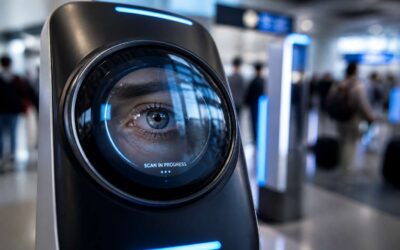
Across South Africa’s ports of entry, biometric screenings have begun to streamline border flow, reducing wait times and boosting accuracy. In government and border control, a biometric security device serves as a fast, trustworthy verifier at passport booths, immigration desks, and restricted staff corridors.
So, “what is a biometric security device” prompts this answer: it’s a living credential—a fast check that pairs human oversight with tamper-resistant logs, ensuring auditable trails without slowing the line.
Deployment snapshots include:
- Passenger verification at border posts
- Access control for secure facilities
- Interagency identity checks in data hubs
Security, Privacy, and Compliance Best Practices
Data protection and encryption standards
Security isn’t a feature; it’s a discipline that hums under the skin of every device. What is a biometric security device? It’s really about how biometric credentials are shielded from prying eyes—encrypted in transit and at rest, guarded by hardware-backed keys, and verified through tamper-evident logs. In practice, strong data protection and encryption standards are the quiet backbone of trust.
To translate that into action, here are best-practice pillars—I’ve seen them work!
- End-to-end encryption for all biometric templates and transit paths
- Hardware security modules and secure enclaves for key storage
- Least-privilege access with strict authentication and audit trails
- Regular independent audits and incident-response readiness
In South Africa, compliance with POPIA and sector-specific rules shapes how data is stored and who may access it. Privacy considerations require transparent data minimisation and consent mechanisms.
Anti-spoofing and liveness detection
In a world where a single breach can shatter trust in a heartbeat, biometric fraud costs organisations billions each year. So, what is a biometric security device? It is a disciplined shield: biometric credentials encrypted in transit and at rest, guarded by hardware-backed keys, verified through tamper-evident logs. Security isn’t a feature; it’s the quiet cadence that underpins every device.
To translate practice into protection for South Africa’s landscape, embrace these best-practice pillars:
- Anti-spoofing and liveness detection to separate the living from the simulacrum!
- Hardware-backed key storage and tamper-evident logs for auditability
- End-to-end encryption for templates and transit paths
- Regular independent audits and incident-response readiness
- POPIA-aligned data minimisation and transparent consent mechanisms
Regulatory compliance and privacy rights
One breach can topple trust in a heartbeat—and biometric fraud costs SA organisations billions each year. So, what is a biometric security device? It is a disciplined shield: biometric credentials encrypted in transit and at rest, guarded by hardware-backed keys, verified through tamper-evident logs. Security isn’t a feature; it’s the quiet cadence that underpins every device.
- Governance and accountability: clear roles and traceable decisions
- Vendor risk and third‑party due diligence to safeguard data
- Transparent consent management and user notices that are easy to understand
- Data lifecycle governance: retention, minimisation, and secure destruction
In South Africa, regulatory compliance and privacy rights demand auditable trails and privacy by design. A robust approach blends governance with risk management, ensuring organisations meet local standards while maintaining the human trust that secure biometric systems promise to protect.
User consent and data retention policies
One breach can topple trust in a heartbeat, and the axiom still holds: what is a biometric security device? In practical terms, it’s a disciplined shield—credentials encrypted in transit and at rest, guarded by hardware-backed keys, verified through tamper-evident logs. Security isn’t a feature; it’s the quiet cadence that underpins every device.
To safeguard privacy and compliance, consent must be clear and ongoing. Pair this with data retention policies that define purpose, duration, minimisation, and secure destruction, so data doesn’t outstay its welcome.
- Transparent, plain-language consent notices and straightforward withdrawal options
- Purpose-limited data retention and minimisation aligned with business needs
- Secure destruction of expired data and tamper-evident audit trails
In South Africa, governance and risk management keep biometric systems trustworthy, balancing local expectations with the people who rely on them.

0 Comments