Overview of the Biometric Security Industry
Trends shaping the biometric security market
Across South Africa, biometric deployments surged 28% last year, a bold heartbeat in a market that won’t stand still. For biometric security companies, this is more than growth—it’s a summons to blend speed with trust, delivering doors that open on demand without compromising privacy.
- Multimodal authentication blends fingerprints, faces, and voices
- AI anti-spoofing and dynamic risk scoring
- Privacy-by-design and POPIA-aligned governance
Edge computing and mobile enrollment slash latency, letting institutions scale secure access across SA’s bustling urban hubs. Financial services, telecoms, and government agencies push adoption while keeping governance tight. The result: smoother user experiences that feel almost uncanny, yet fortified against evolving threats.
Key biometric modalities and use cases
Access should feel inevitable, not invasive. In the biometric security industry, trust becomes the passport, turning entry into a moment that is quick, quiet, and precise. Biometric security companies weave in multi-attribute checks—fingerprints, faces, voices—without slowing the flow. The magic lies in balancing speed with privacy, so doors yield on demand while sensitive data remains protected.
- Fingerprint: everyday staff access
- Facial recognition: frictionless lobby entry
- Iris scan: vault-grade security
- Voice biometrics: remote customer verification
Key modalities answer real-world needs across sectors—from campus gates to financial service desks and government facilities. For SA organizations evaluating biometric security companies, the spectrum of modalities translates into practical workflows.
Competitive landscape and vendor categories
The competitive landscape of biometric security companies reads like a small epic—techno-poetry where speed, trust, and privacy share a single cadence! The market segments split into platform ecosystems, sensor-first hardware houses, and full-service integrators, each courting organizations from campus gates to government precincts. In South Africa, POPIA and local data sovereignty shape choosing paths, elevating vendors that harmonize user experience with responsible data handling.
Vendor categories form the backbone of decisions, revealing who does what and how. The following lanes often define procurement conversations:
- Platform software providers orchestrating identity across devices and channels
- Sensor and hardware manufacturers advancing biometric modalities
- Systems integrators delivering end-to-end deployment and ongoing support
- IAM and data governance partners weaving biometrics into policy and risk rules
Across SA sectors, the emphasis is on seamless flows—doors opening on demand while data remains shielded behind encryption and governance.
Regulatory and privacy drivers influencing adoption
South Africa’s data landscape is steered by POPIA, and in this climate, biometric deployments read like poems of risk and reward. More than 70% of local enterprises report that transparent privacy controls are the hinge on which biometric projects swing. The question is not whether biometrics can identify a person, but whether the trust envelope—consent, transparency, governance—travels with the technology. In this theatre, biometric security companies must choreograph speed with stewardship, ensuring every scan respects rights while guarding assets.
Regulatory and privacy drivers guide adoption, and the strongest players align by design.
- POPIA compliance and record-keeping
- Data sovereignty and cross-border transfer controls
- Privacy-by-design, consent, and user transparency
- Encryption, access controls, and audit trails
- Governance, risk rules, and data minimisation
Biometric security companies that harmonize these strands earn trust as fiercely as they protect credentials.
Biometric Modalities and Authentication Technologies
Fingerprint recognition and authentication
Access is a whisper of trust, and fingerprint recognition and authentication answer with a confident touch. For biometric security companies, this modality remains a lighthouse—fast, familiar, and resilient—backed by clever matching and secure templates that guard every fingertip against fraud. It marries human intuition with machine precision, turning a simple touch into a verifiable identity.
- Fast, on-device matching for quick access
- Fraud resistance through spoof-detection and liveliness checks
- Wide device compatibility, from smartphones to secure workstations
- Integrates smoothly with multi-factor strategies for layered security
Privacy, consent, and regional norms must accompany every scan. In South Africa’s security landscape, fingerprint recognition is often used alongside other modalities to weave a layered defense, a tapestry of trust that invites users rather than encumbers them.
Iris and ocular biometrics
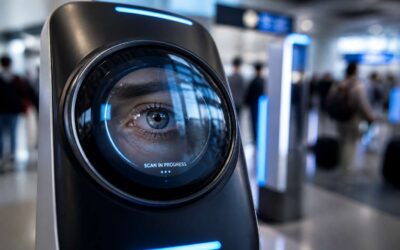
“Eyes are passports in the digital era,” a veteran biometrics designer once said. Iris and ocular biometrics map the iris’s intricate textures to create a robust identity signature. For biometric security companies, this modality is a beacon—fast, non-contact, and remarkably resistant to casual impersonation.
- Non-contact sensing
- Strong spoof-resistance
- Broad device compatibility
In practice, iris systems rely on high-contrast imaging and robust feature encoding that stay stable through light shifts and pupil fluctuations. They employ spoof-detection and liveliness checks to guard against fake eyes. On-device processing paired with privacy-aware templates makes integration into MFA smooth.
In South Africa’s security landscape, iris and ocular biometrics find homes in airports, banks, and secure campuses, delivering fast verification that respects consent and regional norms. “Eyes speak the truth,” as one practitioner likes to say, anchoring a quiet confidence in biometric security.
Facial recognition and anti-spoofing techniques
“Eyes don’t lie,” a veteran biometrics designer likes to say! Facial recognition decodes a thousand micro-expressions in fractions of a second, delivering speed without contact. For biometric security companies, that tempo is trust made visible, verifiable, and discreet.
Yet speed must wear armor. Anti-spoofing matters: depth sensing, multi-spectral imaging, and live-present checks guard against masks and photos as lighting dances across a face.
- Depth-aware 3D sensing and structured-light cues
- Texture and micro-motion analysis to detect spoofed appearances
- Challenge-based liveness such as blink and micro-expressions
- Cross-spectral imaging and robust spoof-detection algorithms
In South Africa, deployments in airports, banks, and secure campuses demand privacy-by-design and consent-aware MFA that respects local norms and data sovereignty.
Voice biometrics and speaker verification
Voice biometrics reads the human voice as a living signature—the timbre, cadence, and subtle inflections that no two speakers share. In South Africa, this modality thrives across mobile apps and contact centers, delivering hands-free authentication that respects privacy while eliminating passcodes from daily life!
Speaker verification complements this by confirming a claimed identity through continuous acoustic patterns, even as accents and environments shift. For biometric security companies in South Africa, voice biometrics offers a discreet yet resilient layer that travels with users, from the road to the office.
- Cross-channel consistency across mobile, IVR, and web apps
- Anti-spoofing via naturalistic liveness cues and environmental noise handling
- On-device processing with privacy-preserving templates
As the nation evolves, voice-based methods echo with responsibility—balancing convenience and consent.
Behavioral and continuous authentication
Security is no longer about a single secret; it’s about how you behave. In the SA digital landscape, where mobile wallets and contact centers hum with activity, behavioral and continuous authentication keep trusted users in while quietly watching for the unusual. For biometric security companies, exploiting living patterns—typing cadence, device grip, motion fingerprints—transforms risk from a moment of login to a daily, seamless safeguard.
These behavioral signals ride on-device or in privacy-preserving clouds, offering cross-channel resilience as users move between app, web, and IVR.
- Keystroke dynamics
- Gait and device handling
- Mouse and touch patterns
Continuous authentication adapts to mood and environment—lowering friction when risk is low and tightening gates when anomalies appear. The result is a living security layer that travels with people and devices, especially in South Africa’s vibrant fintech and enterprise spaces.
Choosing a Biometric Security Solution for Your Organization
Assessing risk, compliance, and data governance
Identity data is the new perimeter, and in South Africa, a single breach can ripple through banks, hospitals, and boardrooms. When selecting a biometric solution, risk, compliance, and data governance are your compass—guiding you toward strategies that protect people and preserve trust among biometric security companies.
Start by mapping data flows: who collects biometric data, where it is stored, and how long it stays there. Then screen for privacy controls, regulatory alignment, and robust incident response.
- Data minimization and purpose limitation under POPIA
- Vendor data processing agreements and cross-border transfer controls
- Auditable incident response and breach notification capabilities
Choose a partner that offers clear governance features and seamless interoperability with your existing IAM stack. Local support, state-of-the-art anti-spoofing, and transparent data handling matter when the goal is durable security and user confidence.
Integration with IAM and enterprise infrastructure
Choosing a biometric security solution for your organization in South Africa begins with how well it plays with your IAM and the wider enterprise fabric. One breach can ripple through banks, clinics, and boardrooms—trust isn’t optional. Among biometric security companies, the winners align data governance, privacy controls, and interoperability with existing systems, turning governance features into a compass.
- Seamless IAM integration with standardized APIs and SSO support
- Auditable incident response, clear data retention policies, and cross-border transfer controls
- Local support, transparent data handling, and robust anti-spoofing capabilities
The right partner offers governance features and seamless interoperability with the IAM stack; local support, state-of-the-art anti-spoofing, and transparent data handling matter when the goal is durable security and user confidence.
Scalability, performance, and uptime considerations
Scale is the quiet deal-breaker. In South Africa’s banks, clinics, and campuses, uptime and growth go hand in hand. Among biometric security companies, the winners design for scale, not just a single rollout. Most aim for 99.9% uptime with sub-second responses to keep processes flowing!
- Elastic, cloud-ready and on-prem deployment
- Low-latency authentication under typical workloads
- Regional failover and disaster recovery
Performance hinges on latency, throughput, and maintenance without downtime. Look for solutions that handle enrollment bursts, device diversity, and seamless updates. Interoperability with existing IAM stacks helps keep the user experience smooth rather than disruptive.
Choosing biometric security companies as your partner in SA means prioritizing scale, reliability, and governance alongside security. The right choice supports durable trust across sectors and remains resilient when demand spikes.
Privacy-by-design and data minimization practices
Across SA’s offices, trust is the new perimeter, and biometric security companies are judged by how quietly privacy-led design keeps doors open and data safe. Privacy-by-design is not an afterthought; it’s the baseline. Two-thirds of South African organisations call privacy a core requirement, so governance matters.
Any solution worth its salt should enforce data minimization, purpose limitation, and clear retention timelines under POPIA. Prefer systems that minimize biometric data collection, support encryption at rest and in transit, and offer auditable access controls so governance survives a spike in scrutiny.
Consider these guardrails when evaluating a partner:
- Privacy-by-design alignment
- Data minimization and retention controls
- Regional data residency and disaster recovery
- Interoperability with existing IAM stacks
Vendor due diligence, security certifications, and audits
Trust is the new perimeter, and biometric security companies live or die by what sits behind the door: rigorous vendor due diligence, clear certifications, and auditable audits. A boardroom truth: security is not a feature; it’s an obligation that must survive scrutiny.
When you evaluate partners, lean on a compact set of checks:
- Security certifications: ISO 27001, SOC 2 Type II, ISO 27701
- Independent audits and testing: third-party pen tests, red-teaming, annual attestation
- Clear governance terms: data handling, retention, incident response aligned to POPIA
Choosing a partner is about ongoing oversight, not a single badge. Seek transparent audit reports, scalable governance controls, and a roadmap that matches your privacy stance. The right biometric security companies partner delivers regular third-party attestations and an unbroken trail of accountability.
Market Landscape, Leaders, and Opportunities in Biometrics
Top vendors and their specialties
Passwords fade like dusk; biometric security companies are rewriting trust. The market shows 70% of large enterprises using two modalities, a signal that single-factor access is fading. The landscape favors global leaders, while nimble regional players tailor risk-aware solutions for South Africa.
- IDEMIA — identity orchestration across government, enterprise, and mobility with policy-driven controls.
- NEC — iris and facial recognition with edge deployment and anti-spoofing.
- Thales — secure provisioning and crypto-enabled biometric wallets for access and payments.
- HID Global — enterprise badge ecosystems and privacy-by-design credentials.
In South Africa, opportunities bloom where private–public partnerships meet smart-city ambitions. Integrations with IAM and cloud platforms enable the deployment of biometric security companies across campuses, banks, and clinics. Local partners, compliant with POPIA and privacy-by-design, can turn risk into resilience and trust. These biometric security companies are poised to partner with South African organizations.
Emerging players and startup innovation
Across global markets, roughly 70% of large enterprises now rely on two biometric modalities, a shift that makes single-factor access feel dinosaurs living in dusk. In South Africa, private–public partnerships and smart-city ambitions amplify this momentum, turning biometric security companies into everyday enablers of safe campuses, banks, and clinics.
Global leaders set the pace, while nimble startup ecosystems push practical, risk-aware solutions. This blend keeps the market dynamic and responsive to local needs.
- Edge-native engines for campuses and clinics
- Privacy-by-design credentials aligned with POPIA
- Public-private pilots for city-wide security networks
Opportunities are strongest where private-sector tech meets public resilience—South Africa’s campuses, banks, and clinics can scale with biometric security companies that respect POPIA and local privacy norms, weaving trust into daily life.
Partnerships and ecosystem strategy
The market landscape for biometric security companies is shifting from novelty to necessity. Global players anchor campuses, banks, and clinics with multi-modal assurance, while South Africa’s private–public ecosystems turn pilots into everyday protection. Edge-native engines and privacy-by-design remain the heartbeat of trust.
Leaders set the pace, blending enterprise-grade security with humane design. Large vendors deliver scale; nimble startups craft field-ready pilots that adapt to local realities. Public-private partnerships and city networks become laboratories for resilience and shared value.
- Public-private pilots for city-wide security networks
- POPIA-aligned privacy frameworks embedded in product roadmaps
- Co-development with campuses, banks, and clinics to accelerate interoperability
The opportunity lies where private-sector tech meets public resilience. In South Africa, the best fits combine governance, transparency, and robust data stewardship, letting safety become a daily attribute across campuses, banks, and clinics.
Pricing models, licensing, and total cost of ownership
Pricing in biometric security companies is not mere number-crunching; it’s the map by which risk dissolves into uptime. In South Africa, budgets favor transparent, predictable models—cloud subscriptions, tiered licenses, and per-site pricing that scales with need. “Pricing should be transparent; trust follows,” says a security director, and that truth lingers in every choice!
- Predictable subscriptions stabilize budgets for campuses, banks, and clinics.
- Tiered licensing lines up features with risk, from core authentication to multi-modal access.
- Ongoing maintenance, audits, storage, and interoperability shape true total cost of ownership.
Leaders fuse scale with a humane touch, offering contracts that bend to public timelines and private networks. Enterprise resilience sits beside licensing flexibility, while support models recognize the realities of real-world deployments across campuses and clinics.
Opportunities bloom where private tech meets public resilience. In South Africa, governance, transparent data stewardship, and TCO can turn pilots into protection across campuses, banks, and clinics.
Regulatory challenges and regional considerations
In South Africa, biometric adoption on campuses, banks, and clinics is a story of trust and timing—governance and data sovereignty set the tempo as much as the technology itself. For biometric security companies, success hinges on clear data practices and transparent storage. Leaders speak of speed and caution, where cloud and on-premises strategies share the stage.
Leaders blend global innovation with local stewardship. They design interoperable solutions, offer flexible licensing, and weave privacy-by-design into deployments. A regional edge emerges when partnerships with SA universities, banks, and health networks translate pilots into durable protections.
- Data sovereignty and local data centers
- Transparent governance and audits
- Adaptive, timeline-aware service levels
Opportunities flourish where private tech meets public resilience. Regulatory challenges—POPIA, consent, and cross-border data transfer—shape how pilots scale across campuses and clinics. The horizon favors biometric security companies that harmonize risk, compliance, and user experience with South Africa’s unique regulatory rhythm.



0 Comments