Key Advantages of Biometric Authentication
Unmatched Convenience in Daily Identity Verification
Think how often you prove who you are. Between work gates, mobile bank apps, payments, the average urban South African might do it twenty times daily. Biometrics reduce that to a single action:a fingerprint or facial scan. No feading, no remembering, just identity confirmed instantaneously.
That convenience has real consequences. Forgetting passwords causes delays; re-entering them a dozen times breeds frustration. A struggling user is more likely to simplify passcodes or bypass security layers. Biometric checks eliminate those compromises. Consider these everyday moments:
- Pay at a till with thumb, no card needed.
- Enter your office via voice match, hands full of documents.
- Approve transactions with face scan, seconds off your lunch break.
So the pressing question remains, is biometric security good for daily life, truly? For frequent verification, it works better than traditional methods. So is biometric security good? In daily use, usually yes. The tradeoff appears really elsewhere.
Harder to Replicate Than Passwords or PINs
A stolen PIN is a silent key. It works until someone changes the locks. Biometric traits behave differently. Your hand or your face is not a secret you can lose or lend. A copied password unlocks an account. A forged fingerprint requires physical access to your actual body, which is a far more demanding crime.
Consider the common attack paths. Phishing emails trick people into typing credentials. Keyloggers capture them. Data breaches spill millions of PINs. None of these methods work against a retina scan or a voice sample. The biometric signal never leaves your device in most modern systems, so there is nothing to intercept.
- Passwords are reused across sites, so one leak exposes many accounts.
- Biometric templates are unique per person and per device, limiting cross-platform damage.
So is biometric security good? When measured against theft and copying, it is clearly stronger. But is biometric security good beyond that? That depends on how the raw data is stored and governed.
Frictionless User Experience Across Devices
Count your logins between sunrise and lunch. Most of us hit double digits before noon! Each one costs you attention, and attention is finite. Biometric authentication removes that tax entirely. Your fingerprint, face, or iris pattern follows you across phones, tablets, and workstations without a single re-entry.
So is biometric security good for the multi-device life most South Africans lead? Yes, and the reason is simple. Your biometric template lives on the device, not the server. The check happens locally, instantly, every time. No SMS delays. No password resets.
- Fingerprint sensors on your laptop and phone share one enrolled identity.
- Face recognition adjusts to changing light and angles without re-enrolment.
That answer holds even when the network misbehaves. I have seen load shedding kill a WiFi connection mid-payment. With biometrics, the session survives. Re-authentication takes under a second when the connection returns. The old model forced you to start over. This one does not.
Reducing Identity Fraud with Physical Uniqueness
Identity fraud thrives on stolen credentials. A fingerprint cannot be skimmed from a discarded receipt. Your physical traits are not stored in a server waiting for a breach. The template is an encrypted mathematical representation, useless without your living body. This is why the question of is biometric security good matters to South African banks. Fraud losses drop when authentication depends on something the criminal cannot obtain. I have seen fraud teams pivot to easier targets. Consider what physical uniqueness dismantles:
- Synthetic identity fraud built from stolen ID numbers.
- Account takeovers that rely on password reuse from old data leaks.
- Call centre social engineering that resets security questions.
Each attack relies on information that can be shared or sold. A fingerprint cannot be transferred. An iris pattern cannot be typed into a phishing form. The security stays attached to the person, not the password.
Speed and Efficiency in High-Volume Environments
In high-volume environments, the question of is biometric security good transforms into a matter of minutes saved. At a corporate bank’s client service centre, biometric verification cuts each check to under three seconds. This speed does not sacrifice accuracy, even when matching against a population of millions.
Consider what this means for daily peaks. A payroll run for 10,000 employees, a stadium entry, or an emergency room triage all demand immediate identity confirmation. Biometrics handle this volume without manual review. One senior operations manager told me, “Our afternoon queue vanished within a week of deployment.”
- Teller stations clearing 40 customers per hour instead of 12.
- Mobile onboarding compressing a 20 minute form into a 3 minute scan.
- ATM withdrawals authenticated at the machine, not the back office.
This efficiency is why South African retailers and public institutions are shifting infrastructure. Faster authentication means fewer abandoned transactions and reduced labour costs. The speed works because the system relies on a single live capture, not multiple verification steps. For every second saved at scale, operational resilience grows.
Potential Risks and Security Weaknesses
Biometric Data Theft and Replay Attacks
Biometric data is the one secret you cannot change. Once stolen, a fingerprint or iris scan follows you for life. Theft often happens at the database level, where templates are stored for verification. Replay attacks take it further, as a recorded voice sample or a lifted fingerprint image can be replayed to fool a sensor. Consider the common attack vectors:
- Database breaches exposing stored biometric templates.
- Sensor-level spoofing with high-resolution photos or molded replicas.
- Interception of data during transmission between device and server.
Each vector undermines the promise of physical uniqueness. So is biometric security good? Only when systems encrypt templates and verify liveness. Without those safeguards, biometrics become a permanent liability. The real question is biometric security good enough to justify the risk, and for many South African organisations, that answer remains unsettled.
False Acceptance and False Rejection Rates
Every biometric system must calibrate its tolerance for error. A stricter threshold keeps impostors out but can lock out legitimate users. A looser threshold speeds things up but lets suspicious matches slip through. The result is a constant seesaw between false acceptance and false rejection.
In South Africa, think of a factory gate where hundreds of workers scan in each morning. Too strict, and workers queue for manual checks. Too relaxed, and unauthorised individuals might gain access. Neither outcome answers whether is biometric security good, but both explain why organisations hesitate.
Consider where each risk carries weight:
- False acceptance: an imposter matches the wrong fingerprint at a bank ATM.
- False rejection: a nurse cannot access patient records during an emergency.
These errors define the practical limits of the technology.
Spoofing Vulnerabilities with Fake Fingerprints or Faces
Fake fingerprints aren’t sci-fi. A thief can lift a print from a glass surface and press it onto a silicone mold. A face? A 3D printed head can trick some phone cameras. In South Africa, the biometric industry expands regardless. So is biometric security good? Only if the system detects whetherthe finger or face is alive. Without liveness checks, biometrics become a trivial task to bypass. Consider what security teams face:
- Pressing a silicone finger onto a sensor
- Holding up a printed photo to a webcam
- Using a voice recording to bypass speech recognition
Each method exploits a common flaw:the sensor cannot tell living tissue from a copy. That is why some banks in Johannesburg now pair fingerprints with PIN codes. Is biometric security good? It deserves a conditional answer. Good for convenience, yes. Good for absolute protection, no. Biometric data, once stolen, cannot be changed. That permanence is the real vulnerability.
Compromised Templates and Irreversible Identity Loss
When a biometric template falls into the wrong hands, the damage persists. Banks and mobile networks in South Africa store mathematical versions of your fingerprint or face, and those templates can be copied, shared, or sold. I have found no way to reissue a fingerprint like a bank card.
This is why, when people ask is biometric security good, the answer depends on how templates are secured. A compromised template creates irreversible identity loss! It can link your face to fraudulent loans, SIM swaps, or welfare claims.
- No reset option for stolen biometrics.
- One leak can affect multiple services.
- Victims may face years of verification disputes.
System Dependency on Hardware Sensors and Algorithms
Biometric systems depend entirely on hardware sensors and algorithms. A fingerprint sensor on a budget phone may capture less detail than a premium scanner, and that can lead to failed matches or, worse, a false acceptance. The algorithm’s training data also matters; if it was built without enough diversity, it might not recognize certain skin tones or fingerprint patterns.
Think about what happens when a sensor degrades. Dust, scratches, or moisture can distort readings. Your phone might abruptly stop recognizing your thumb, locking you out of your banking app. That moment makes you wonder, is biometric security good when it depends on hardware that can fail?
- Sensor quality varies widely across devices.
- Algorithm updates can change matching behavior.
- Power outages or software crashes can disable biometric authentication entirely.
Privacy and Data Protection Concerns
Converting Biometric Traits into Storable Data
When a fingerprint leaves your fingertip, it becomes a numeric representation stored somewhere you cannot see. That representation can be copied, sold, or leaked without your awareness. In South Africa, data protection laws impose duties, but enforcement lags behind biometric systems.
Consider what happens after conversion. A template rarely exists solely for your own verification. It can be shared with partners, retained indefinitely, or used for analytics. The consent you gave for a specific transaction seldom extends to these uses. Yet the question is biometric security good becomes more intricate than a yes or no.
The risks increase when databases intersect. A facial scan logged for one service could align with another, linking habits to identity. Because biometrics are immutable, a single misstep affects you for life. Is biometric security good? It depends on data governance, not performance.
Legal Frameworks and Consent Requirements
South Africa’s Protection of Personal Information Act classifies biometric data as sensitive personal information. Processing it demands explicit consent, but the reality often falls short. Consent is buried in lengthy terms of service, and users tap accept without realising they have authorised third-party sharing, cross-referencing, or indefinite retention. The law sets boundaries, yet enforcement remains uneven.
So, is biometric security good? The answer depends on whether organisations honour the legal safeguards designed to protect citizens.
Meaningful consent requires several elements:
– Clear notification of what data is collected and why
– Specific purpose limitation rather than blanket authorisation
– The right to withdraw consent without penalty or loss of service
Without these, biometric systems operate in a legal grey zone. The framework exists, but its application lags behind the technology it regulates.
Risk of Surveillance and Unauthorized Tracking
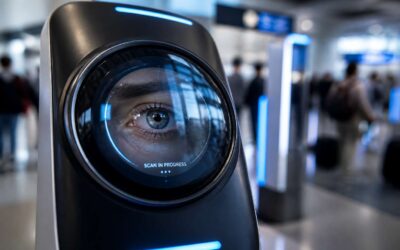
The same biometric identifiers that unlock your phone can be captured by cameras in shopping centres, airports, and street corners. This creates unauthorised tracking infrastructure.
Consider what happens when facial recognition is linked to public surveillance networks. Movement patterns emerge. Associations form. The data trail builds without a single tap from you. South Africans face this passive collection, often unaware.
So, is biometric security good when it enables invisible observation? I would argue the concern isn’t the technology itself, but how it operates in public spaces without oversight. Biometric matching can identify you in a crowd, log your routines, and share data across agencies.
What should worry citizens:
- Cameras that scan faces without a visible warning
- Cross-referencing of biometric data with banking, travel, or social media records
- Retention of location histories linked to your identity
Each capability expands the tracking envelope and erodes the boundary between public and private life.
Data Breach Consequences for Personally Identifiable Information
When a company stores your biometric template, they also store connected details like your name, ID number, and address. A breach exposes both together.
The consequences extend beyond a stolen password. You cannot reset your fingerprint. Attackers can cross-reference leaked biometrics with other breached databases, building fuller profiles. For South Africans, where identity theft is escalating, this is a serious concern.
- Financial accounts linked to facial scans
- Medical records matched to voiceprints
- Social media profiles tied to iris data
Is biometric security good if a single breach compromises your identity permanently? The answer depends on how organisations protect this irreplaceable data.
Cross-Matching Across Databases and Third Parties
Think about your last biometric scan. Is biometric security good when that same scan ends up in three different databases? We hand over fingerprints for memberships and facial scans for building access without knowing where the data travels. Vendors, cloud storage partners, and software developers access the same templates, widening the exposure across systems.
Cross-matching across databases compounds the risk. A voiceprint captured by a bank could be linked to a facial scan from a retail loyalty programme. Third parties hold fragments of your biometric identity without your knowledge:
- Analytics firms building behavioural profiles
- Fraud detection services aggregating identity data
- Cloud providers storing unencrypted templates
Under POPIA, consent is mandated, but enforcement gaps remain.
Implementation Considerations and Best Practices
Choosing the Right Biometric Modality for Your Use Case
A fingerprint degrades after years of manual labour, while a face struggles under harsh industrial glare. Asking whether biometric security is good obscures a more relevant question: is it good for your operational context? For high-volume factory gates, contactless palm readers outperform optical sensors. For a corporate headquarters, iris scanning gives you high precision, but demands user patience and a fixed camera angle.
Implementation needs planning. Deploy an offline cache first, since South African load shedding disrupts cloud connections mid-verification. Always include a fallback PIN as a courtesy to your users. Consider the device lifecycle, since older readers may not support newer algorithms.
I weigh these factors in a pilot:
- A live setting with fifty users reveals true false rejection rates under local lighting.
- Vendor defaults often set a low liveness threshold, which you must reject.
Only then can you judge if biometric security is good for your risk appetite!
Encryption and Secure Storage of Biometric Templates
After choosing your modality, the real question of whether biometric security is good begins at the storage layer. A template left in plaintext is a permanent liability, and no amount of liveness detection will excuse it. Encryption at rest is the baseline, but key management is the part that keeps the whole arrangement honest. For match-on-device systems, keep the reference inside a secure enclave and never expose it to the application layer. When server side matching is unavoidable, apply salted hashes with per-record salts and rotate them on a schedule. Your vendor will resist this, but your audit trail will thank you. Consider these practices:
- Encrypt templates with AES-256 and store keys in a hardware security module.
- Bind templates to the device’s trusted execution environment to prevent cloning.
- Log all access to template storage and monitor for anomalous read behaviour.
The phrase “is biometric security good” loses its abstraction when you accept that a stolen template cannot be reissued. Treat the database with the same care as your backup key, because that is precisely where it belongs.
Multi-Factor and Adaptive Authentication Strategies
Multi-factor authentication turns a biometric from a single point of failure into one layer of a wider system. The question “is biometric security good” shifts when you pair a fingerprint with a one-time code or a hardware token. This limits damage from a compromised credential because an attacker still needs the other factor.
Adaptive authentication evaluates context: location, time, device trust, typing rhythm. If something looks off, request an additional step. This avoids friction when risk is low. For South African users, where mobile data costs matter, keeping risk assessments efficiently is a practical concern.
- Enroll multiple samples to capture natural variation.
- Offer a secure fallback, like a PIN, for failed scans.
- Review authentication logs for unusual patterns.
Adaptive authentication uses real-time signals to decide when to push for a second factor. A multi-factor strategy forces attackers to work through several checkpoints, shaping system resilience.
User Education and Transparent Policy Communication
Spend an afternoon watching commuters in Sandton unlock their phones and you will see the trade happening in real time. Fingers meet screens, faces catch light, and somewhere a server decides who you are.
Implementation asks more of an organisation than installing sensors. Enrolling multiple samples of a trait captures natural variation over time. A secure fallback, such as a PIN, prevents lockouts during failed scans. Reviewing authentication logs reveals odd rhythms before they become breaches. For South African users, a single failed scan costs mobile data on re-verification, so efficiency shapes acceptance of the system.
Transparent policy communication carries the quieter load. People need to know where a template lives, who may access it, and what happens after deletion. When users understand those boundaries, suspicion settles into steady trust. The answer to is biometric security good depends less on the sensor than on the honesty of its stewards.
Regular Security Audits and Algorithm Updates
Biometric systems are not static installations. A fingerprint sensor that enrolled clean templates in March may struggle by October as skin elasticity changes or the optical lens accumulates residue. Regular security audits should test live capture against stored templates, measure false rejection rates under varied lighting, and probe for new spoofing vectors. Sandton offices that run quarterly audits detect threshold drift before it becomes a lockout crisis.
Algorithm updates demand the same vigilance. Vendors ship patches to refine liveness detection or adapt to new presentation attacks. Each update should undergo staging tests, with version histories documented so regressions are traceable. Teams should monitor post-update error rates, because a fix that improves one demographic may impair another. The question of is biometric security good resolves only through this continuous maintenance. An audited, updated system performs differently from an abandoned one.
Comparing Biometric Systems to Traditional Methods
Biometrics vs. Passwords for Threat Resistance
Every 39 seconds, a cyberattack targets a business, and most still hinge on stolen passwords. The question of is biometric security good often comes down to how it holds up against credential theft. Passwords rely on secrecy; biometrics rely on physical presence. An attacker can phish a password from anywhere, but spoofing a fingerprint requires proximity and preparation.
However, biometrics introduce their own threat surface. Unlike a password, a compromised fingerprint cannot be reset. For South African organisations, the choice is not about perfection. It’s about which risk profile you can manage. A layered approach often wins, combining something you know with something you are.
- Passwords are vulnerable to bulk phishing and credential stuffing.
- Biometric traits are harder to steal remotely but carry permanent consequences if breached.
Ultimately, biometrics offer stronger resistance to remote attacks, while passwords fail under volume.
Cost Implications of Deploying Biometric Infrastructure
Let’s talk rands and cents. Traditional password systems look cheap until you count help desk calls for resets and breach cleanup. Biometric hardware, sensors, and template databases demand serious upfront capital, plus ongoing algorithm licensing. That’s before you factor in replacing devices when sensors fail in dusty or high humidity environments.
For South African businesses, the question of is biometric security good often becomes a balance sheet exercise. The recurring costs differ sharply. Password sprawl creates quiet, continuous drains on IT time. Biometric deployments carry heavier initial shock but fewer routine support tickets. A hybrid approach might spread the financial risk.
- Enrolment stations for capturing traits
- Secure storage for encrypted templates
- Regular recalibration of ageing sensors
Those costs need honest accounting before you commit to any path.
Recovery Options When Credentials or Traits Fail
When a password fails, the recovery path is straightforward. A reset link, a security question, a call to the IT desk. The credential is discarded and a fresh one issued. Biometric traits do not offer that option. A damaged fingerprint leaves you waiting for a fallback procedure.
Recovery options for biometric failure typically include:
- Backup PINs or passcodes
- Hardware tokens issued at enrolment
- One-time codes sent to a registered mobile number
The question of is biometric security good becomes urgent when you realise the fallback often resembles the password system you tried to replace. Re-enrolment after a severe injury requires fresh template capture. Passwords simply get reset. That asymmetry matters for South African organisations weighing risk against convenience.
User Acceptance and Accessibility Challenges
Comparing biometric systems to traditional methods reveals a different set of trade offs. Passwords require only memory and a keyboard. Biometrics demand functioning sensors and a readable trait. A farm worker in the Western Cape with worn fingerprints might find a PIN more reliable than a scanner that keeps rejecting them.
User acceptance also hinges on trust. South Africans who have experienced data breaches often view biometric capture with suspicion. Traditional credentials feel replaceable, whereas a face or fingerprint feels permanent. Accessibility challenges include:
- Users with visual impairments struggling with camera based facial recognition
- Older individuals unfamiliar with the enrolment process
- People whose physical traits change due to age or injury
Asking is biometric security good for a population that cannot reliably capture a trait exposes a critical flaw. The answer depends on whether the system accommodates the people it serves, rather than assuming every hand is pristine and every camera angle favourable.
Scalability and Integration with Existing Security Systems
Scaling biometric systems across an organisation requires careful thought. Traditional credentials like passwords simply ride on existing infrastructure. Biometrics demand new enrolment workflows, sensor hardware, and template storage. For a Johannesburg bank rolling out fingerprint access to 5,000 employees, the integration cost can rival the security benefit.
The question of is biometric security good becomes a logistics puzzle. A small retail chain might integrate facial recognition with its existing CCTV. A government department may need to link biometric verification to legacy databases. Each path differs.
Key integration points include:
– Enrolment processes that capture clean reference templates
– Backend systems that match traits against employee or citizen records
– Fallback protocols when sensors fail or traits degrade
Traditional systems scale predictably. Biometrics multiply complexity with every new site or user group. For a national identity programme, is biometric security good when you must match millions of unique traits across provinces? The answer depends on the integration blueprint from day one.

0 Comments