Advantages of Biometric Airport Security Systems
Enhanced Security Measures – How biometric identification reduces security breaches
In a world where airport security breaches can feel as common as bad coffee, biometric airport security systems emerge as the sharpest weapon against would-be infiltrators. They don’t just keep troublemakers at bay; they make it virtually impossible for imposters to slip through unnoticed. Even the sneakiest twin or doppelgänger has a hard time fooling a biometric scanner—think of it as the ultimate identity snob!
These cutting-edge systems harness unique biological traits—think fingerprints, iris scans, or facial recognition—creating a fortress of personalized security. This tailored approach vastly reduces false positives and ramps up the chances of catching the real culprits. Plus, with rapid processing times, travelers aren’t left standing in long queues, grumbling about missed flights or lost luggage. It’s security with a wink and a nod, ensuring that the only thing crossing borders smoothly is your passport—or your iris, in some cases.
- Reduced security breaches
- Enhanced authentication accuracy
- Streamlined passenger screening process
- Decreased reliance on manual verification
Streamlined Passenger Flow – Reducing wait times with automated verification
Imagine a world where travelers glide through airport terminals with the effortless grace of a dancer, unhampered by tedious queues and invasive checks. This isn’t a distant dream; biometric airport security systems are transforming the very fabric of air travel—cutting wait times and elevating convenience to a new echelon. In South Africa and beyond, these systems revolutionize passenger flow by seamlessly integrating identification into the journey itself, rather than disrupting it.
With automated verification at its core, biometric airport security systems eliminate the need for manual identity checks that often bottleneck passenger movement. Travelers simply present their biometric data—be it fingerprint, iris scan, or facial recognition—and are swiftly processed. This rapid authentication not only minimizes congestion but also enhances the overall travel experience, turning what once was a frustrating ordeal into a streamlined passage. After all, when technology becomes intuitive, it invites travelers to focus on what truly matters—embarking on their journey with confidence and ease.
In fact, the efficiency of these systems leads to tangible benefits:
- Reduced wait times at security checkpoints, allowing more time for relaxed pre-flight routines
- Accelerated passenger throughput, easing congestion in busy airports
- Enhanced traveler satisfaction, transforming airport visits from stressful to seamless
By embracing biometric airport security systems, airports in South Africa are not only upgrading their infrastructure but also redefining the traveler experience—an evolution where speed and security coexist in harmonious precision. Now, crossing borders and boarding flights becomes less a chore and more a journey of effortless sophistication. When technology works silently in the background, the focus returns to the human experience—simultaneously more secure, more efficient, and undeniably smoother.
Improved Accuracy of Identity Checks – Minimizing human error in security screening
Accuracy isn’t just a fancy bonus feature; it’s the backbone of trustworthy biometric airport security systems. Imagine trying to pick out a pearl in a sea of nearly identical grains—human error is bound to happen, especially when tired eyes and hurried hands are involved. Fortunately, biometric technology ratchets up the precision, minimizing those embarrassing mix-ups and slip-ups. When facial recognition, fingerprint scans, or iris verification are at the core, the margin for error shrinks dramatically.
Instead of relying solely on manual checks that can be misread or misremembered—hello, human fallibility—biometric airport security systems leverage sophisticated algorithms designed to identify travelers with near-perfect accuracy. This means fewer false positives and negatives, which can be the difference between a seamless journey and unnecessary delays. Plus, with continuous advancements, these systems only get smarter, faster, and more reliable, making security breaches a thing of the past.
- Increased detection of imposters due to precise biometric matching.
- Reduced likelihood of misidentification, ensuring the right person gets through.
- Consistent verification standards, no matter how sleepy or distracted the security personnel might be.
All these factors come together to create a biometric airport security system that’s not only precise but also resilient—pushing the boundaries of what technology can achieve in safeguarding borders and enhancing passenger trust. When accuracy becomes the default, everyone can board with confidence—and maybe even a little bit of that rare airport relaxation.
Cost Efficiency in the Long Term – Reducing operational expenses through automation
In an era where every second at the airport counts, the long-term financial benefits of biometric airport security systems are nothing short of transformative. By automating routine verification processes, these systems dramatically cut operational expenses — eliminating the need for a vast army of manual staff and reducing costly errors. Instead of pouring resources into labor-intensive checks, airports can channel funds into cutting-edge technology that works tirelessly behind the scenes, ensuring safety and efficiency.
Not only do biometric airport security systems streamline resource allocation, but they also pave the way for scalable expansion without exponentially increasing overhead costs. As passenger volumes grow, these systems adapt seamlessly, maintaining high standards of security without the need for proportional staff increases. This scalability ensures airports stay resilient and cost-effective into the future. The magic of automation here isn’t just in convenience—it’s a strategic investment that integrates operational finesse with fiscal prudence.
Passenger Convenience and Experience – Making travel smoother with biometric technology
Travelers today crave a seamless journey, yearning for comfort and speed without sacrificing safety. With biometric airport security systems, that desire becomes a reality, transforming the way we experience airports. The moment a passenger’s face or fingerprint is verified, it’s like entering a world where screens are no longer barriers but gateways to smooth, hassle-free travel.
Imagine arriving at the airport, and within seconds, your identity is confirmed—no long lines, no fumbling with documents. Biometric technology ensures you move swiftly through checkpoints, making the entire process feel almost magical. This level of passenger convenience not only elevates the travel experience but also fosters a sense of trust and confidence in the safety measures in place.
- Enhanced personalization, where your journey feels tailor-made
- Reduced stress from long waits and manual checks, giving travelers peace of mind
- Empowering airports to deliver a more human touch, despite reliance on advanced machines
Ultimately, biometric airport security systems embrace the human need for efficiency and comfort, making each journey not just easier but more connected and personable—an essential stride towards the future of air travel in South Africa and beyond!
Types of Biometrics Used in Airport Security
Fingerprint Recognition – Applications and benefits in airports
In the labyrinthine corridors of modern airports, where time dissolves into an incessant blur, the deployment of biometric airport security systems emerges as a beacon of innovation. Among these, fingerprint recognition remains the most widespread,
serving as an intimate digital signature that binds travelers to their identities with a rare precision.
This technique leverages the unique ridges and valleys of fingertips, transforming a simple touch into a portal of authentication. Its applications extend beyond mere verification, embedding itself into boarding processes and customs checks, ultimately accentuating the seamless flow of passenger movement.
Such systems not only fortify the security fabric but also cultivate an environment where travelers feel both protected and valued.
In the pursuit of optimal security, fingerprint recognition’s undeniable benefits include enhanced accuracy and rapid identification, which mitigate the risks of identity fraud. As airports in South Africa integrate these biometric airport security systems, the era of manual checks dissolves into a digital dance—where trust and efficiency intertwine, shaping a future where every journey begins with confidence.
Facial Recognition Technology – How facial scans expedite boarding processes
In the symphony of modern airport security, facial recognition technology plays a pivotal role, transforming the way passengers move through bustling terminals. This innovation employs sophisticated cameras and algorithms to analyze facial features, turning a simple glance into a powerful tool of identification. Its visual precision accelerates boarding, reduces bottlenecks, and enhances the passenger experience in ways once thought impossible.
Facial scans are seamlessly integrated into biometric airport security systems, allowing travelers to register once and travel confidently without manual checks. Imagine walking into an airport where your face becomes your passport—no queues, no fuss, just a fluid passage through security gates. This technology not only bolsters security but also elevates efficiency in ways that benefit both airports and passengers, making every journey feel like a smooth, orchestrated dance.
- High-speed recognition ensures rapid verification, even in the busiest hours.
- Multi-angle cameras capture detailed facial data, reducing errors and false positives.
- Integration with other biometric modalities creates a comprehensive security ecosystem with minimal intrusion.
As biometric airport security systems evolve, their ability to deliver swift, contactless identification continues to redefine travel comfort and safety across South African airports. With each scan, the era of manual, time-consuming checks gradually diminishes—ushering in a future where the face, in all its uniqueness, becomes the key to seamless travel.
Iris and Retina Scanning – High-security biometric methods and their advantages
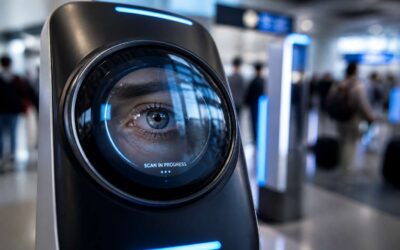
Among the most high-security biometric methods used in airport security are iris and retina scanning. These technologies are remarkably precise, making them invaluable in environments where identity verification cannot be compromised. Unlike fingerprint or facial recognition, iris and retina scans analyze the unique patterns of the eye’s iris or the layers of the retina, which are virtually impossible to duplicate or fake.
Advantageously, iris scanning provides quick and contactless verification—ideal for busy airports seeking seamless passenger flow. Retina scans, on the other hand, have an even higher accuracy level but often require closer proximity and are typically reserved for heightened security zones. The combination of these biometric modalities within biometric airport security systems creates a formidable layer of defense, minimizing security breaches while maintaining a smooth passenger experience.
- Exceptional accuracy ensures reliable identification even under challenging conditions.
- Contactless operation reduces the risk of cross-contamination—a crucial factor in modern security.
- Rapid recognition capabilities streamline the passenger journey through security checks.
In South Africa, these high-security systems now play a vital role in establishing trusted and resilient airports. As biometric airport security systems continue to advance, iris and retina scanning stand out as the most secure options, protecting both travelers and infrastructure from evolving threats while simplifying the passage through customs and border control.
Voice Recognition – Emerging uses within security and verification
Voice recognition is emerging as an intriguing frontier in biometric airport security systems, weaving itself seamlessly into the fabric of modern aviation safety protocols. While traditional methods like fingerprint and facial recognition have become familiar faces at security checkpoints, voice biometric technology promises a new layer of sophistication, driven by its natural, intuitive interface. Imagine uttering a simple phrase and being verified—no fuss, no contact.
In airports across South Africa, voice recognition is gradually gaining traction, offering an efficient solution that minimizes physical interactions. Its inherent convenience is matched by its resilience against spoofing attempts, since voiceprints are as unique as a fingerprint but much more challenging to replicate fraudulently. This makes voice biometrics an attractive addition to a comprehensive biometric airport security system.
To provide a clearer picture, consider these advantages:
- Contactless verification, reducing cross-contamination risk—especially vital in today’s health-conscious world.
- Capability to operate in noisy environments, which is common in bustling airport terminals.
- Touch-free security checks, enhancing passenger convenience and decreasing processing times.
As biometric airport security systems evolve, voice recognition is poised to revolutionize verification processes, transforming how travelers navigate through security with effortless ease and heightened safety. Its adaptive nature and growing reliability position it as a vital component of future-ready airports in South Africa and beyond.
Multimodal Biometric Systems – Combining methods for increased accuracy
In the realm of biometric airport security systems, no single method reigns supreme. Instead, the cutting edge lies in multimodal biometric systems—an intricate fusion of various identification techniques working in harmony to bolster accuracy and security. This layered approach transforms the passenger experience, creating an almost seamless journey through security checkpoints, leaving behind the outdated fears of false positives or missed identifications.
By combining fingerprint recognition with facial recognition and iris scans, airports can create a robust verification framework that capitalizes on each modality’s strengths. For example, fingerprint and facial recognition together vastly reduce the chances of identity impersonation. Moreover, iris and retina scanning elevate the security game, providing nearly impenetrable resistance against fraud.
- Enhanced reliability thanks to cross-verification between multiple biometric identifiers.
- Increased resilience against spoofing attempts, making the system more trustworthy.
- Greater flexibility in challenging environments where one modality might falter.
In South Africa’s bustling airports, the strategic deployment of multimodal biometric systems signifies a leap toward smarter, safer, and more efficient air travel. Each layer adds another safeguard—a testament to the relentless pursuit of excellence in biometric security technology that continues to evolve behind the scenes, quietly but decisively shaping the future of security and verification in aviation.
Implementation Challenges and Security Concerns
Data Privacy Regulations – Ensuring compliance with GDPR and other standards
Beneath the gleaming surface of biometric airport security systems lies a tapestry woven with intricate challenges, each demanding meticulous navigation. Implementing such advanced technology requires overcoming technical hurdles, from integrating biometric databases seamlessly with existing infrastructure to ensuring high system availability amidst complex operational environments. Security concerns are equally paramount—balancing the need for robust protection with safeguarding individual liberties presents a delicate dance.
Data privacy regulations, especially in South Africa, necessitate rigorous compliance. Ensuring that biometric data remains confidential and is handled within the strictest legal frameworks is non-negotiable, as unauthorized access could gravely undermine trust. Here’s a quick glance at some hurdles faced:
- Balancing security enhancement against privacy risks
- Upholding GDPR and local regulations for data processing
- Addressing technical limitations in biometric accuracy and speed
Ultimately, the sophistication of biometric airport security systems must be matched by a steadfast commitment to transparency and accountability. The ethical choreography required to navigate these security labyrinths defines the future of safe, seamless travel.
Data Storage and Security – Protecting biometric data from breaches
Implementing biometric airport security systems isn’t just about cutting-edge technology; it’s a high-stakes voyage through a labyrinth of technical, legal, and ethical hurdles. One significant challenge lies in secure data storage. Biometric data—fingerprints, facial scans, iris patterns—are invaluable but vulnerable if mishandled. Breaches could shatter public trust and expose passengers to identity theft. Ensuring this precious data remains impenetrable demands state-of-the-art encryption and rigorous security protocols.
Security concerns extend beyond mere data breach prevention. Counterfeit access, hacking attempts, or insider threats threaten the integrity of biometric airport security systems. To address this, many airports deploy layered defenses, including biometric data anonymization and access controls tailored for maximum resilience. Here, an ordered approach makes sense:
- Implement multi-factor authentication for sensitive data access.
- Regularly audit security procedures and conduct vulnerability assessments.
- Use tamper-resistant hardware modules to safeguard biometric information.
Remaining one step ahead is crucial because, in the realm of biometric airport security systems, complacency invites breaches. As technology advances, so do the methods of cybercriminals. Protecting biometric data isn’t just a technical task—it’s a moral commitment that keeps the future of seamless, safe travel intact! The stakes have never been higher, nor the challenges more complex.
Technology Reliability – Addressing false positives and system errors
Implementing biometric airport security systems is a complex endeavor fraught with challenges that go beyond technological advancements. One of the most significant hurdles is ensuring the reliability of these systems, as false positives or system errors can pose serious security risks. Imagine a passenger being mistakenly flagged or, worse, an actual security threat slipping through because of a glitch—these are genuine concerns within the realm of biometric airport security systems.
System errors often stem from poor image quality, environmental factors, or algorithm biases, which can compromise accuracy. To combat this, rigorous testing and continuous calibration are essential. Moreover, addressing these issues requires a resilient infrastructure that integrates advanced machine learning algorithms capable of adapting to diverse conditions. Maintaining trust in biometric airport security systems is paramount, especially when millions rely on them daily for a seamless travel experience.
- Continuous system monitoring
- Regular updates to biometric algorithms
- Comprehensive training for personnel on troubleshooting
While technological reliability remains a core concern, security breaches due to vulnerabilities in these systems are equally alarming. Cybercriminals are increasingly sophisticated, targeting biometric data stored across various airports. Protecting this sensitive information demands layered security measures—double encryption, tamper-resistant hardware, and vigilant security audits—to ensure the integrity of biometric airport security systems remains intact.
Integration with Existing Security Infrastructure – Overcoming technical and logistical hurdles
Integrating biometric airport security systems into existing security infrastructure is a formidable challenge that demands both technical finesse and logistical ingenuity. Airports are complex environments where multiple systems—from baggage scanners to passenger verification—must operate seamlessly. Ensuring that biometric systems fit smoothly into this ecosystem requires meticulous planning and collaboration across departments. The goal is to create a unified security framework that leverages the strengths of biometric identification while minimizing disruptions.
One of the primary hurdles involves compatibility. Older infrastructure might lack the necessary interfaces or processing power to support high-tech biometric systems effectively. Upgrading legacy systems can be costly and time-consuming, but it’s essential for reliable performance. An ineffective integration could lead to delays or gaps in security, undermining the very purpose of adopting these advanced solutions.
In addition, logistical challenges surface when managing the flow of millions of travelers through biometric verification points. Properly training personnel to troubleshoot and maintain these systems is crucial for avoiding bottlenecks. To address these issues, some airports prioritize phased rollouts—testing biometric systems in limited zones before full implementation—ensuring smooth transition and ongoing operational consistency.
- Compatibility with existing hardware and software
- Infrastructure upgrades to support high-resolution imaging
- Personnel training in biometric system operation and troubleshooting
Overcoming these technical and logistical hurdles not only enhances security but also boosts traveler confidence. When seamlessly integrated, biometric airport security systems can deliver both efficiency and peace of mind—making every journey safer and more stress-free.
Ethical Considerations – Balancing security with individual rights
Implementing biometric airport security systems presents significant challenges that cannot be overlooked. One of the most pressing issues involves ensuring the reliability of these systems amid high passenger volumes. System errors, false positives, and system crashes can cause delays, frustration, and potential security gaps—issues that no airport can afford to overlook. Additionally, integrating biometric technology into existing infrastructure often requires extensive upgrades, which can be expensive and disruptive to daily operations.
Security concerns extend beyond technical hurdles. Ethical considerations are central to the adoption of biometric airport security systems. Airports must find a delicate balance between maintaining robust security and respecting individual rights. Concerns over data privacy and consent loom large, especially when biometric data is stored or shared across jurisdictions. Some travelers worry about unauthorized data sharing or breaches that could compromise their personal information. Addressing these issues requires compliance with strict data privacy regulations like GDPR and implementing rigorous security protocols to guard biometric data from potential breaches.
To foster trust and transparency, airports are increasingly adopting strategies such as clear communication about data usage and incorporating privacy-preserving technologies. It’s a complex dance of technological progress and ethical responsibility, but prioritizing both is essential for the sustainable success of biometric airport security systems.
Future Trends and Innovations in Airport Biometric Security
Artificial Intelligence and Machine Learning – Enhancing accuracy and speed
As biometric airport security systems evolve, the integration of artificial intelligence (AI) and machine learning is ushering in an era of unparalleled efficiency and precision. These cutting-edge technologies are not just improving accuracy—they’re revolutionizing the speed at which passenger verification occurs, making travel smoother and more secure. AI-driven algorithms can analyze vast amounts of biometric data in real-time, reducing false positives and ensuring that only authorized individuals proceed with seamless confidence.
Future trends suggest an increasing reliance on multimodal biometric systems that combine fingerprint recognition, facial recognition, iris scanning, and even voice recognition. This layered approach significantly enhances accuracy and reduces vulnerabilities, creating a robust shield against security breaches. Moreover, ongoing innovations in data security protocols are vital, guaranteeing that biometric data remains protected from potential breaches while complying with global privacy standards. The continuous refinement of biometric airport security systems promises a future where travel is not only safer but also remarkably more intuitive—and almost instinctively effortless for passengers navigating busy airports.
Contactless and Touchless Biometrics – Responding to health concerns post-pandemic
Post-pandemic, biometric airport security systems are stepping up their game with contactless and touchless solutions—because nothing screams “welcome to 2024” like scanning your face or iris without so much as a finger tap. As travelers increasingly prioritize health and hygiene, airports worldwide are embracing innovative biometric technologies that eliminate physical contact, reducing the risk of contagion while speeding up the verification process.
These advancements aren’t just about convenience—they’re a vital adaptation to the new normal. Touchless biometric systems leverage facial recognition, voice identification, and even palm vein scans to authenticate identities effortlessly. Imagine breezing through security without fumbling with documents or touchscreen kiosks—it’s almost like magic, but with more code and less pixie dust.
Looking ahead, the integration of multimodal biometric systems will become more prevalent, combining face, iris, voice, and fingerprint data for a layered security approach that’s resilient and hard to spoof. This approach not only heightens accuracy but also improves resilience against spoofing attempts and false positives. As airports refine biometric airport security systems to account for diverse passenger needs, privacy concerns are also prompting the development of smarter data protection protocols and encryption methods—ensuring biometric data remains shielded from breaches and in line with global privacy standards.
With the relentless march of technological progress, contactless and touchless biometrics are no longer futuristic pipe dreams—they’re fast becoming the standard, creating an almost seamless travel experience. As airport security systems evolve, the future promises a clever blend of safety, speed, and hygiene, making long lines and touch screens relics of a bygone era.
Blockchain for Secure Data Management – Innovative solutions for biometric data security
As biometric airport security systems continue to evolve, blockchain technology emerges as a game-changer in safeguarding passenger data. Imagine a digital fortress, where every biometric scan—whether a facial recognition or iris scan—is encrypted on a decentralized ledger, making breaches nearly impossible. This innovation promises not only heightened security but also a new level of trust, ensuring travelers’ personal information remains private amidst a whirlwind of technological advancements.
Implementing blockchain into biometric airport security systems creates an unbreakable chain of custody for biometric data, allowing only authorized entities to access sensitive information. Plus, it facilitates seamless international cooperation without compromising privacy regulations. For travelers, this means a future where identity verification is swift, secure, and privacy-preserving—almost like a secret handshake with digital confidence.
- Enhanced transparency and auditability of biometric data usage
- Decentralized data control that resists tampering
- Streamlined verification processes that do not compromise security
By harnessing blockchain technology, airports are not just upgrading; they are revolutionizing how biometric data is managed, stored, and protected. This blend of innovation ensures biometric airport security systems can meet the highest standards of security and privacy, paving the way for a future where travel feels as effortless as it is safe.
Global Standardization and Interoperability – Facilitating cross-border travel
As the world becomes more interconnected, the demand for seamless and secure cross-border travel continues to surge. The future of biometric airport security systems hinges on establishing global standardization and interoperability—an unspoken promise that borders won’t be barriers, but bridges. Imagine a future where a traveler from Johannesburg to Cape Town, then seamlessly onward to London, navigates through a unified biometric verification process—without repetitive passport checks or cumbersome paperwork.
Achieving this level of harmony requires international cooperation and the harmonization of biometric data standards. It’s not just about technology; it’s about fostering trust among nations, airlines, and travelers. Bodies like the International Civil Aviation Organization (ICAO) are already paving the way, promoting standardized biometric protocols that ensure consistent security measures worldwide.
- Global biometric data formats ensure compatibility across borders.
- Unified verification platforms enhance passenger experience and security.
- International data sharing agreements streamline security checks while safeguarding privacy.
With these trends shaping the horizon, biometric airport security systems are evolving into the backbone of future travel—making journeys faster, safer, and more connected than ever before. The supernatural potential of these innovations lies in their ability to unlock a world where borders blur—sealed not with barriers, but with biometric trust.
Integration with Other Security Technologies – Combining biometrics with AI surveillance and predictive analytics
As glidepaths of innovation intersect with the relentless pace of travel, biometric airport security systems stand at the forefront of a digital renaissance. The future beckons with the promise of unprecedented integration—where artificial intelligence (AI) surveillance and predictive analytics coalesce into a symphony of security and efficiency. Imagine biometric data not only verifying identities but actively predicting potential threats before they materialize—an elegant ballet of technology and intuition working hand-in-hand.
Emerging trends suggest a seamless union of biometric authentication with AI-powered systems, transforming airports into intelligent hubs. Advanced machine learning algorithms refine security protocols, minimizing false positives and enhancing system reliability—dancing gracefully on the tightrope between security and privacy. In such an environment, biometric airport security systems evolve beyond mere identification tools into dynamic guardians of safety and passenger experience.
- Multimodal biometric systems combine facial recognition, fingerprint scans, and iris detection, increasing accuracy in fast-paced settings.
This convergence fosters a new era of contactless, touchless verification, addressing health concerns in a post-pandemic world. By harnessing blockchain technology, biometric data security becomes more resilient, unlocking opportunities for safer data storage and sharing. These innovations underscore a future where airport security is not just a checkpoint but an intelligent, adaptive system—an ode to progress in the unending pursuit of seamless, secure travel.



0 Comments