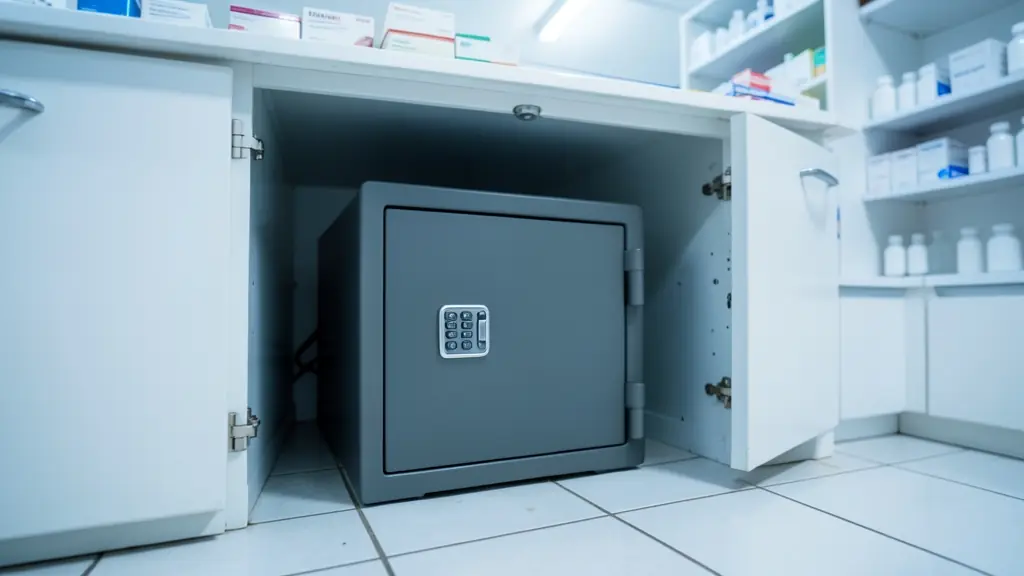
A key gets left in a drawer and a code gets written on a sticky note inside the cupboard door. A biometric safe opens to an enrolled fingerprint, so the person who can open it is the person standing there, in a few seconds, without hunting for a key. That speed is the point for a pharmacist at the dispensary or a firearm owner at night. But the finger pad is only the front door: the steel, the certification, the backup key and how the safe is bolted down decide how secure it really is.
Drawer, wall, cabinet or floor safe
- Drawer and desk safes: small, quick to reach, for a handgun, cash float or passports. Light enough to carry off if not bolted.
- Wall safes: set into a brick wall between studs or in a built in cupboard; check the wall thickness first.
- Cabinet and long gun safes: tall safes for rifles and shotguns, bolted to the floor and the wall.
- Floor safes: set into concrete, hard to remove, slower to reach for daily use.
Measure what goes inside, then add room. A safe crammed full is opened carelessly and left open.
Firearms and insured valuables: check the rating first
For firearms, the Firearms Control Regulations require a safe that meets SANS 953-1. A fingerprint pad does not make a safe compliant; the body, door and locking do. Check the safe is certified to SANS 953-1 if it will hold firearms, and ask the supplier for the proof.
Insurers often set their own safe category for cash and jewellery, based on the cover amount. Ask your insurer which category they need before you buy, not after a claim. A pharmacy should also check what its inspector and pharmacy rules require for scheduled medicines.
When the finger pad will not open it
- If the battery is flat: most safes warn first, and many have an external battery point or contacts. Change the batteries on a schedule, not when they die.
- If the finger will not read: enrol two or three fingers on each hand, and a second trusted person. Wet, cut or dusty fingers read poorly.
- If the electronics fail: the backup key opens it. Keep that key away from the safe, never in the drawer beside it.
- If you forget the backup code: follow the supplier's reset process, which should need proof of ownership.
Fitting it properly, in order
- Choose a spot out of sight, away from where visitors pass, and not in the main bedroom cupboard every burglar checks first.
- Bolt the safe to the concrete floor or a solid brick wall with the anchor bolts supplied or specified. A loose safe is a box for carrying off.
- Enrol the fingers, set the backup code and test the backup key before you load it.
- Record the serial number and keep the paperwork for your insurer.
- Check the battery and the bolts each year, as part of the site's maintenance.
What to put in your request
- Say exactly what the safe will hold
- Say if it will hold firearms
- Give the inside size you need
- Describe the floor or wall for bolting
- Ask if delivery and installation are in
Biometric Safes for homes, estates, offices, factories and schools
- Homes: a bedside drawer safe for a handgun or a cupboard safe for jewellery and passports
- Estates, complexes and body corporates: a safe in the estate office for keys, cash takings and the gate remotes
- Offices and practices: a cabinet safe for petty cash, backup drives and company documents
- Factories, warehouses and mines: a safe in the stores for high value tools, keys and wage packets
- Shops, restaurants and filling stations: a back office safe for the cash float and the day's takings before banking
- Schools, colleges and creches: a safe in the bursar's office for fees, exam papers and keys
- Clinics, hospitals and pharmacies: a dispensary safe for scheduled medicines that only the pharmacist can open
- Farms, smallholdings and lodges: a long gun safe bolted down in the farmhouse for rifles and ammunition