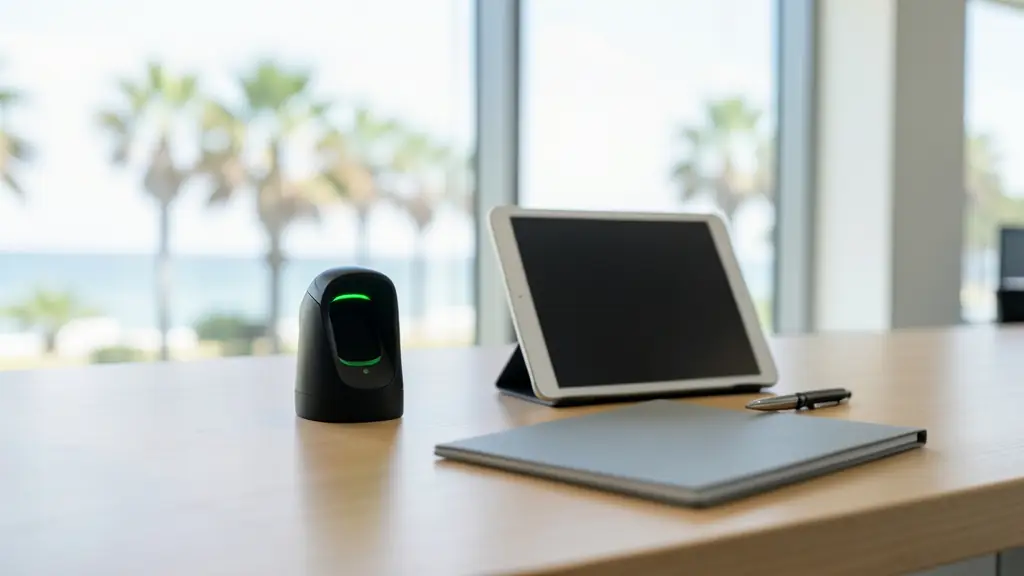
An ID book or card proves that a person with that number exists. It does not prove that the person handing it over is that person. Biometric verification closes the gap: a fingerprint or a live selfie is matched against the records the Department of Home Affairs holds for that ID number, through a verification provider with access to the national population register. It is used once, at the moment you take someone on, and that makes it a different job from opening a door every morning.
How a verification check works
The business captures the person's ID number and either a fingerprint on a small desktop scanner or a selfie on a phone or tablet. The provider sends that to be matched against Home Affairs records for the ID and returns a result: match, no match, or a problem such as a deceased or blocked ID. Some services also return the photo on record so staff can compare it with the person at the counter.
The result is about identity, not character. It does not check criminal records, credit or qualifications, which are separate checks with their own consent.
Fingerprint at the counter or a selfie on a phone
- Fingerprint: suits a branch, a dealership or an HR office where the person is present. It needs a scanner the provider supports, and worn fingers can fail just as they do at a door.
- Live selfie: suits remote onboarding, such as a tenant applying online or a new hire in another town. The app must use liveness detection so a photo of someone else's face is refused.
- Both: some businesses take a selfie remotely and a fingerprint on the first day on site.
Who uses it, and for what
- Banks and financial services: FICA checks when opening accounts.
- Employers and labour brokers: confirming new staff are who they say before they go on the payroll, then enrolling them on the time and attendance system.
- Estates and landlords: screening tenants and contractors before they get a tag or a visitor pass.
- Car dealers and cellular retailers: checking identity before a finance deal or a contract.
Verification once, access every day
Verification answers "is this the person on the ID?" once, against a national record. Biometric access control answers "is this one of our enrolled people?" thousands of times, against your own database. They often work together: an employer verifies a new worker at hiring, then enrols the same finger on the site's clocking terminals.
Both involve special personal information, so get consent, say why you need it, keep the result only as long as needed and read biometric data and POPIA.
What to put in your request
- Give the number of checks you expect a month
- Say whether people are present or remote
- Say what the result is used for
- Ask what each result returns
- Ask how long the provider keeps the data
Biometric Verification for homes, estates, offices, factories and schools
- Homes: checking a new domestic worker or gardener is who their ID says before they start
- Estates, complexes and body corporates: verifying tenants and contractors before the body corporate issues a tag or pass
- Offices and practices: confirming identity for new hires and clients before contracts are signed
- Factories, warehouses and mines: labour brokers and factories checking new workers at hiring before enrolment
- Shops, restaurants and filling stations: dealers and cellular stores checking identity before a finance or contract deal
- Schools, colleges and creches: checking identity of new staff and regular contractors before they start on site
- Clinics, hospitals and pharmacies: verifying patients or new staff at registration where identity fraud is a worry
- Farms, smallholdings and lodges: checking seasonal workers' identity at the start of the harvest before clocking enrolment