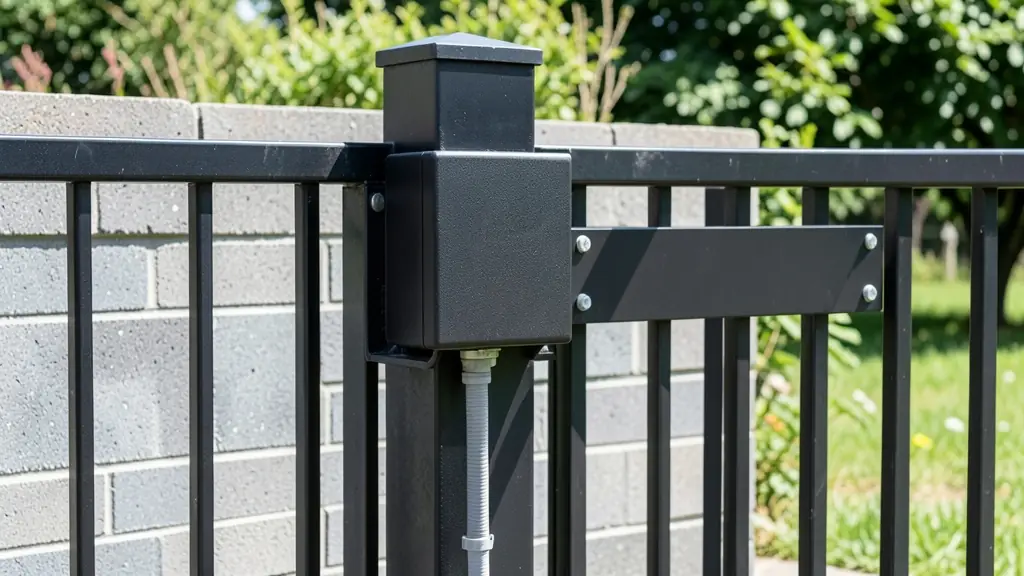
A maglock has no moving parts: an electromagnet on the frame grips a steel plate on the door for as long as current flows. That makes it simple, quiet and hard to pick, and it is the most common lock on access controlled doors in South Africa. It also means the door is unlocked the moment the power stops, and that a plate a few millimetres out of line holds far less than the number on the box. Here is how to choose the size, the bracket and the power so a controlled door actually stays shut.
Holding force: the classes and what they suit
Maglocks are sold by holding force, commonly in classes of roughly 60 kg for cabinets and small cupboards, 180 kg for light internal doors, 280 kg for most single doors, 350 kg for heavier or busier doors, and 500 kg upward for gates and heavy steel doors. A double door usually takes a double lock.
The figure is only reached when the plate sits flat and full on the magnet face. Choose with the maglock calculator, which takes the door and gives the class, the bracket and the current.
Brackets for the way the door swings
- Door opens away from the lock side (out swing from the secure side): the magnet fixes flat under the frame head and the plate sits on the face of the door.
- Door opens towards the lock side: a Z and L bracket brings the plate and the magnet onto the same plane.
- Narrow frame or no head room: an L bracket drops the magnet below the frame.
- Frameless glass: a glass door bracket clamps the plate to the glass without drilling.
If the bracket bends when someone leans on the door, the force is lost through the flex, not through the magnet.
Power, fail safe and the fire alarm
A maglock runs on 12 V or 24 V DC and draws current the whole time the door is locked, so it needs a proper power supply with a battery. In load shedding the battery decides how long the door stays locked; size it with the backup battery calculator.
Being fail safe suits escape doors, but escape routes still come under SANS 10400-T and the fire by-laws: check with the fire engineer or the fire department, and wire the lock so the fire alarm cuts its power. The 230 V side of the power supply needs a registered electrician and a CoC.
In plain words, the wiring is a loop: the power supply feeds the lock through the controller's relay, the exit button and the break glass unit, so any one of them can break the loop and free the door.
Gate maglocks outdoors
A pedestrian gate beside a sliding gate or at a complex pool takes a weather rated maglock, often in the heavier classes, in a steel housing that protects the cable from the elements. Salt air on the coast corrodes plates and screws, so ask for stainless parts. Pair it with a gate intercom so the house can release it.
What to put in your request
- Say which way the door swings
- Give the door material and thickness
- Ask which holding force class and why
- Ask for the battery backup in hours
- Ask how the fire alarm releases it
Magnetic Locks for homes, estates, offices, factories and schools
- Homes: the pedestrian gate beside the driveway, released from the intercom handset
- Estates, complexes and body corporates: the pool gate and the clubhouse door, released by a resident's tag
- Offices and practices: glass doors at reception held shut and freed by the receptionist's button
- Factories, warehouses and mines: heavy steel doors to the stores and the change rooms on a bigger class
- Shops, restaurants and filling stations: the back door and the stock room, released when the fire alarm sounds
- Schools, colleges and creches: the gate from the drop off zone, released from the admin office
- Clinics, hospitals and pharmacies: ward and dispensary doors that open at once when the fire alarm sounds
- Farms, smallholdings and lodges: the gate into the pack house yard and the chemical store door