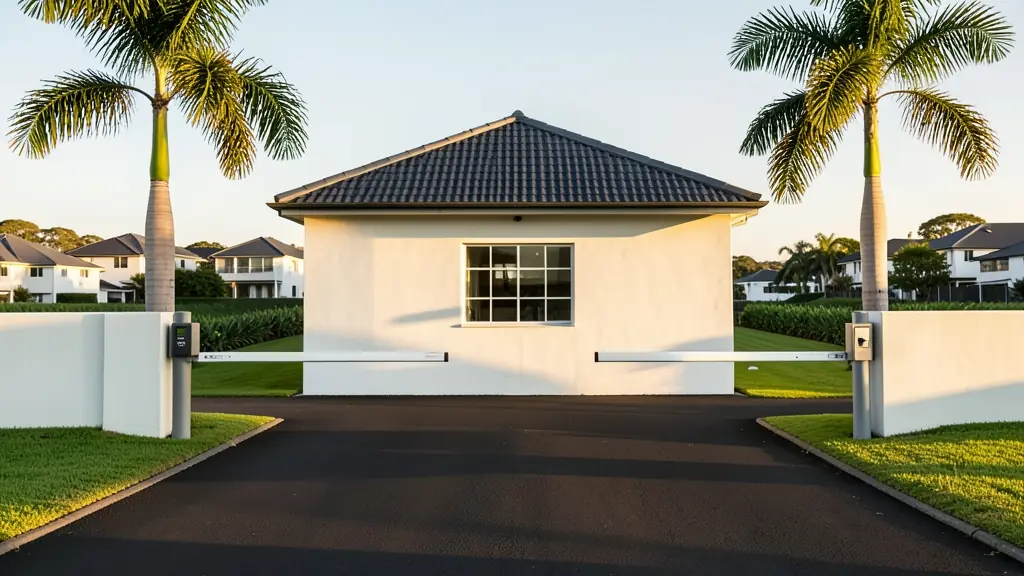
In a Midrand complex the problem starts small: a resident notices a car they do not recognise using a remote, then the body corporate finds three copies of the same code. In a larger estate it is the morning queue of domestic workers, gardeners and contractors at one pedestrian gate. Estate access control is the system at the entrance that tells residents, visitors and staff apart, lets each in their own way, and keeps a record the body corporate can rely on. Most of the decisions are about people and rules, not hardware.
Give residents and visitors separate lanes
The single biggest improvement at most gatehouses is splitting the lanes. Residents drive through a lane that opens on their credential without the guard. Visitors queue in their own lane, where the guard checks a code, scans a licence disc or calls the unit on the intercom. A pedestrian gate or turnstile handles people on foot.
With one shared lane, every visitor delays every resident, and frustrated residents start tailgating. Separate boom gates with their own loops also keep the logs clean, so the record shows which lane each car used.
Cloned remotes and tags, and what replaces them
- Fixed code remotes: the code can be copied in minutes with a cheap cloner. Most complexes with a cloning problem start here.
- 125 kHz proximity tags: better than nothing, but also easy to copy.
- 13.56 MHz encrypted cards: much harder to clone, and cancelled the moment one goes missing.
- UHF windscreen tags: read from a few metres, tied to one car, and they tear when removed.
- Number plate recognition or biometrics: nothing to lend out. See number plate recognition; a fingerprint or face reader on a gooseneck post works for drivers too.
Contractors, domestic workers and the guard
People who work in the estate need entry, but not at 02:00. Put them on time zones: a domestic worker's card or fingerprint works on her employer's days and hours, a builder's for the contract period only. The resident who employs them should be able to add and remove them, so the gatehouse is not doing it by hand.
The guard still matters. The system handles the routine; the guard handles the exceptions, the deliveries and anyone who does not fit a rule. Pre-registered visitor codes sent from an app take most of the phone calls off the guard. Visitor management systems explains how.
What the body corporate has to decide
- Which credential residents use, and whether a card or remote stays available for those who refuse biometrics.
- Who adds and removes residents, staff and tenants, and how fast leavers are deleted.
- How visitors are identified, and whether licence discs or IDs are scanned.
- How long the logs are kept and who may search them; biometric templates are special personal information under POPIA, so ask a POPIA practitioner or your legal adviser before enrolling anyone.
- Who pays for a lost card or tag, and which conduct rule covers it.
What to put in your request
- Give the number of units and residents
- Describe the lanes and gates you have now
- Name the problem: cloning, queues or logs
- Say how visitors should be let in
- Ask how residents manage their own staff
Estate Access Control for homes, estates, offices, factories and schools
- Homes: the owner adds their domestic worker and gardener on set days without visiting the gatehouse
- Estates, complexes and body corporates: resident and visitor lanes, clone resistant credentials and a log the trustees can trust
- Offices and practices: an office park run like an estate, with tenants managing their own staff cards
- Factories, warehouses and mines: an industrial park entrance where each tenant's trucks and staff are listed separately
- Shops, restaurants and filling stations: a lifestyle centre within an estate with its own delivery entrance and times
- Schools, colleges and creches: a school inside an estate with parents' cars admitted at drop off and pick up times
- Clinics, hospitals and pharmacies: a retirement village gatehouse where carers and nurses come and go on shifts
- Farms, smallholdings and lodges: a farm or game estate with shareholders' cars, staff housing and a guarded main gate