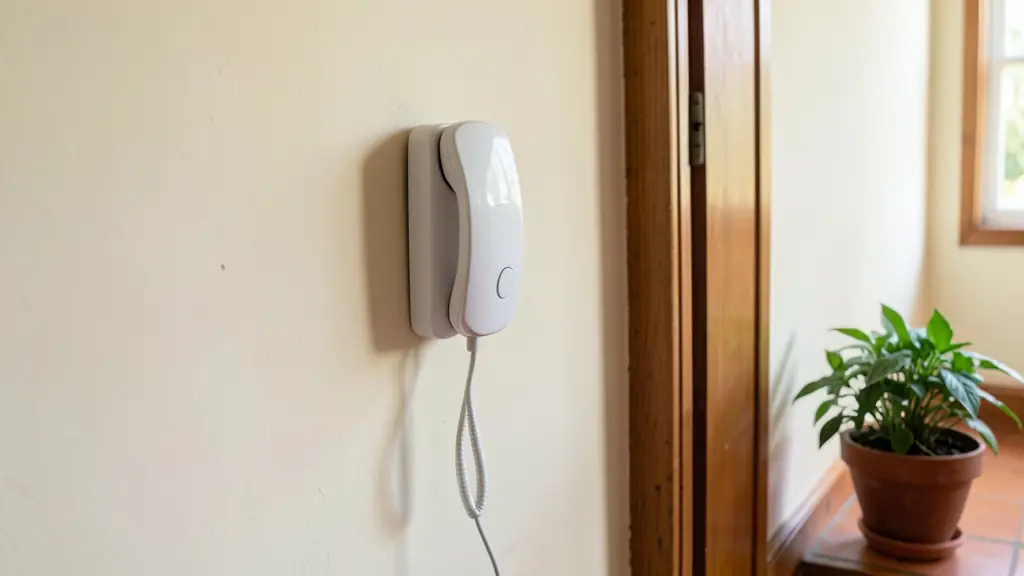
Someone presses a button at the gate; inside, a handset rings and you decide whether to press release. That is all an intercom does, yet the choices behind it are wide: hear the caller or see them, run a cable or rely on a SIM card, ring one house or forty flats. Getting it wrong usually means a trench dug twice or a system that goes quiet in a power failure. Start with who needs to answer and from where, then the rest follows.
Hear them, see them, and where the call should ring
An audio intercom gives you a voice and a release button. It is simple, cheap to run and fine where you know most callers. A video intercom adds a camera at the gate and a screen inside, which matters when you cannot see the street from the house. The video intercoms page goes into cameras and monitors.
Then decide where you want to answer: a handset in the kitchen, a second one upstairs or in the cottage, your cellphone while you are at work, or all of these. Every extra answering point changes which kind of system makes sense.
How the call gets to the house
- 2-wire: power, voice and often video share one pair of wires. Good for reusing an old intercom cable.
- IP: runs over network cable, often powered by PoE, and links to apps and access control software. Suits new builds and blocks of flats.
- GSM: the gate station holds a SIM card and calls your cellphone. No cable to the house, but it uses airtime and needs signal at the gate.
- Wireless kits: a radio link between gate and house. Easy to fit, but walls, distance and other radio signals limit them.
One house or a block of units
A single home needs one station at the gate and a handset or two inside. A complex or a block of flats needs a panel with a button per unit or a keypad and a directory, and a station in each unit or app based calling. The body corporate should decide who keeps the unit list current when owners and tenants change. For gatehouses, lanes and visitor codes, see estate access control.
Most intercoms can also release a pedestrian gate lock and trigger the gate motor, so the person answering can open both.
If this, then that
- If the old intercom cable is still in good condition: a 2-wire system can often reuse it and spare you a trench.
- If there is no cable and the driveway is long: GSM avoids the trench, as long as the gate gets good signal.
- If you are building or renovating: lay conduit from the gate to the house now, even if you fit the intercom later.
- If power failures are long in your area: ask whether the intercom and the gate lock run from a battery, and for how long. The backup battery calculator helps size one.
What to put in your request
- Say how far the gate is from the house
- Say whether an old intercom cable exists
- List every place that should answer the call
- Ask what keeps it working in a power failure
- Ask if the trench and paving are included
Intercom Systems for homes, estates, offices, factories and schools
- Homes: a gate station and a handset in the kitchen, with release for the gate motor
- Estates, complexes and body corporates: a multi button or keypad panel at the gate calling each unit or an app
- Offices and practices: a station at the street door ringing reception, which buzzes visitors in
- Factories, warehouses and mines: a call point at the truck gate ringing the guardhouse or the weighbridge office
- Shops, restaurants and filling stations: a back door station so staff can check a delivery before they open
- Schools, colleges and creches: a call point at the visitors' gate that rings the front office
- Clinics, hospitals and pharmacies: an after hours station at the pharmacy or clinic door ringing the duty staff
- Farms, smallholdings and lodges: a GSM station at a far farm gate that calls the farmer's cellphone