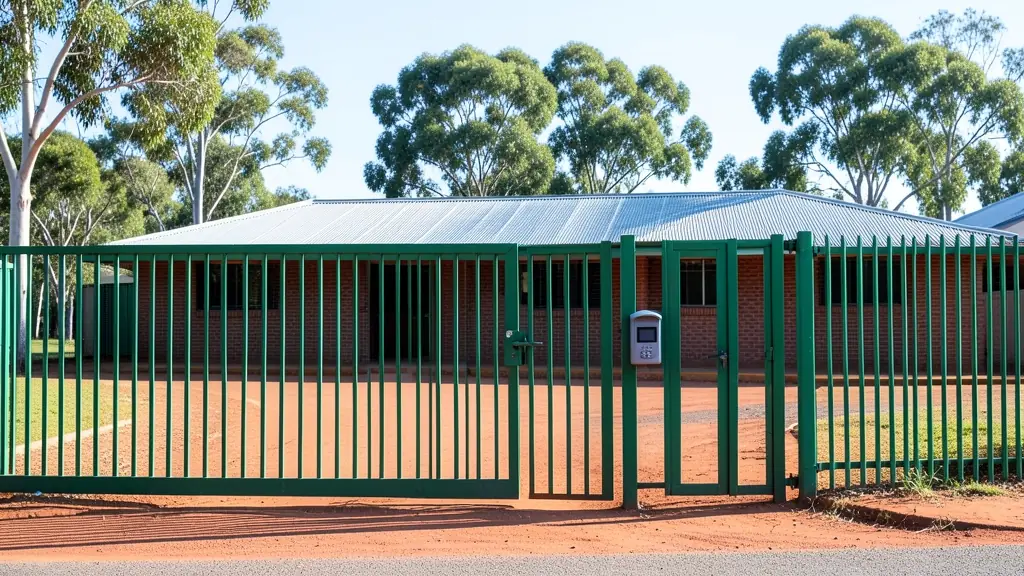
A school principal in Mthatha described the problem simply: at 07:30 hundreds of learners arrive through one gate, and by 09:00 nobody can say for sure who else is on the grounds. Access control for a school is less about locking things and more about funnelling people. Learners come in through a gate that closes after the bell. Every adult who is not staff goes past reception. Staff areas, labs and the computer room open only to the right people, and the whole site can be locked down or evacuated in minutes.
The school day, gate by gate
- Morning arrival: the learners' gate stands open under a teacher or guard's watch, then closes after the bell. A turnstile can count learners in at larger schools.
- During the day: one entrance only, past reception, with every other gate locked.
- Dismissal: gates open wide for the crowd, and the staff car park boom stops parents driving in.
- After hours: the sports field and the hall open for functions on a time zone, while classroom blocks stay locked.
One way in for visitors
The most useful change many schools can make costs very little: close every pedestrian gate except one, and route that one past the reception window. A video intercom at the gate lets the secretary see the caller before releasing the lock, so strangers never reach the corridors unannounced.
Replace the paper register with a system that records the visitor's name, who they came to see, and the times in and out. A visitor management system also prints a badge, so staff can spot an adult without one, and gives an accurate list if the school has to evacuate.
Cards or biometrics for learners and staff
Staff usually get a card or a fingerprint for the gate, the staff room, the labs, the computer room and the store. That is the easy part, and it gives the school a record of who opened which door.
Learners are harder. Cards are cheap and parents understand them, but they get lost, swapped and forgotten. Fingerprints or face recognition avoid that, but learners are children, so the school must get parents' or guardians' consent and offer a card to those who do not consent. Ask a POPIA practitioner or your legal adviser before enrolling any learner.
A lockdown and evacuation routine
- Agree who can trigger a lockdown, and from where: the office, a button in each block, or the software on a phone.
- Set the doors so a lockdown locks entry but never traps anyone; escape doors must open from inside, so check the plan with the fire engineer or the fire department.
- Link the fire alarm so all controlled doors release when it sounds.
- Print the visitor list and the staff list at the assembly point.
- Run a drill each term and fix what failed.
What to put in your request
- Give the number of gates and buildings
- Give learner and staff numbers
- Say which entrance should be the visitor gate
- Say cards or biometrics for learners
- Ask how lockdown and fire release work
School Access Control for homes, estates, offices, factories and schools
- Homes: parents see the school's gate times and register in advance for meetings and events
- Estates, complexes and body corporates: a school inside an estate shares the gatehouse but keeps its own visitor entrance
- Offices and practices: the school's admin office, bursar and records room on stricter staff only access
- Factories, warehouses and mines: technical colleges with workshops and machinery rooms open only to trained staff and students
- Shops, restaurants and filling stations: the tuck shop and uniform shop on their own door, opened only in trading hours
- Schools, colleges and creches: one visitor entrance, staff on cards or fingers, learners counted in at the gate
- Clinics, hospitals and pharmacies: the sick bay and medicine cupboard locked to the teacher on duty and the nurse
- Farms, smallholdings and lodges: a rural farm school with a single fenced gate and a staff member holding the code