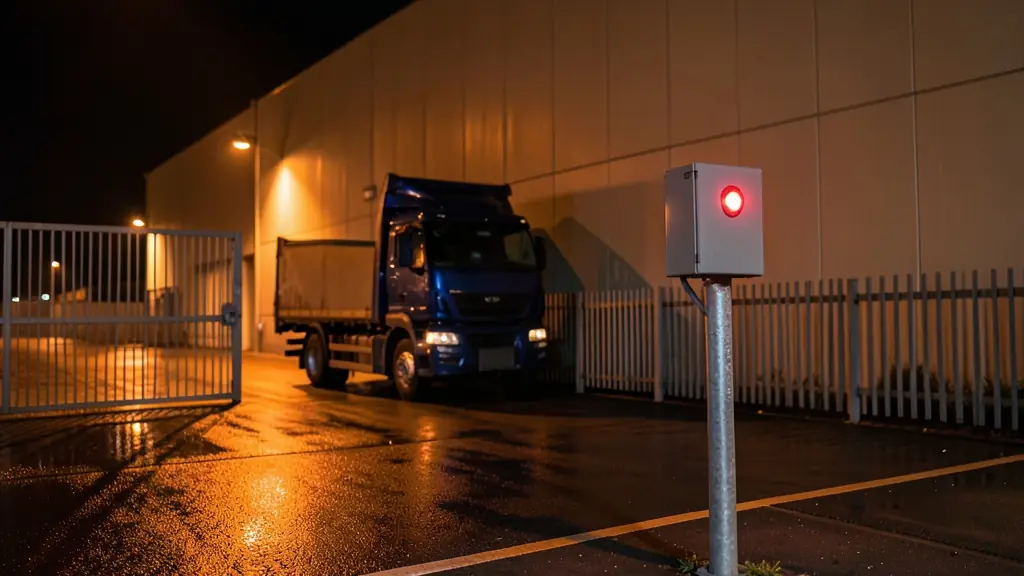
A depot in Pinetown with sixty trucks going in and out, or a Midrand estate with eight hundred residents' cars: either way, the guard cannot read every plate and type it in. Number plate recognition (LPR or ANPR) puts a camera at the boom that reads each plate, checks it against a list and lifts the arm for the cars on it, while logging every other vehicle with a photo and a time. It works well when the camera is placed properly and the lists are kept clean. It struggles when either is ignored.
Getting the camera in the right place
- Mount it where every car must stop or slow down, usually a few metres before the boom, so the plate fills enough of the picture.
- Keep the angle shallow; a camera looking down steeply from a gantry or sideways across two lanes misreads more.
- Make sure it has infrared lighting for night, so headlights do not blind it.
- Keep the afternoon sun out of the lens, or fit a hood.
- Give each lane its own camera; one camera for an entrance and an exit side by side causes mix ups.
The lists behind the camera
The camera only reads; the software decides. A permitted list holds residents' or fleet plates, often grouped so contractors' bakkies work only on weekdays. A blocked list flags cars the body corporate or the depot manager has barred. Every other plate is a visitor, logged and sent to the guard or the intercom.
The lists are where systems fail in practice. Residents sell cars, borrow a spouse's car and fit new plates after moving province. Ask who updates the list, how quickly, and whether residents can do it in an app. See visitor management systems for how visitor plates tie in.
When the plate alone is not enough
A plate is easy to copy, and a false plate on a stolen car reads the same as the real one. For a resident's lane that is a known risk; for a high security site, the plate should be one of two checks. Pair it with a UHF windscreen tag so both must match, or have the driver present a finger or card at a gooseneck reader.
Plan for false reads too. Dirty, faded, bent or personalised plates, trailers, tow bars covering the plate and motorbikes all read less reliably. Keep a tag, a remote or the guard as the fallback for those.
The log is personal information
A list of plates with dates, times and photos shows where people were, so the Protection of Personal Information Act applies to it. Put a notice at the entrance saying the camera records plates and why, decide how long the log is kept, limit who can search or export it, and delete records you no longer need. For the details that apply to your estate or depot, ask a POPIA practitioner or your legal adviser. The biometric data and POPIA page covers the same questions for fingerprints and faces.
What to put in your request
- Give the number of entry and exit lanes
- Say how many plates go on the permitted list
- Say whether a boom is already in place
- Ask how visitors' plates are logged
- Ask who updates the list and how
Number Plate Recognition for homes, estates, offices, factories and schools
- Homes: rare at a single house, though a camera can log every car on a long private driveway
- Estates, complexes and body corporates: residents' cars lift the boom on their plate while visitors' plates are logged at the gatehouse
- Offices and practices: staff cars enter the business park parking without a tag, and visitors are matched to bookings
- Factories, warehouses and mines: every truck in and out of the depot logged with a time, matched to the trip sheet
- Shops, restaurants and filling stations: car park entry and exit times read from the plate at a shopping centre
- Schools, colleges and creches: staff cars admitted to the staff parking and unknown cars flagged to the guard
- Clinics, hospitals and pharmacies: doctors' cars let into reserved hospital parking, ambulances never stopped
- Farms, smallholdings and lodges: bakkies and trucks at the pack house logged during harvest without a guard writing them down