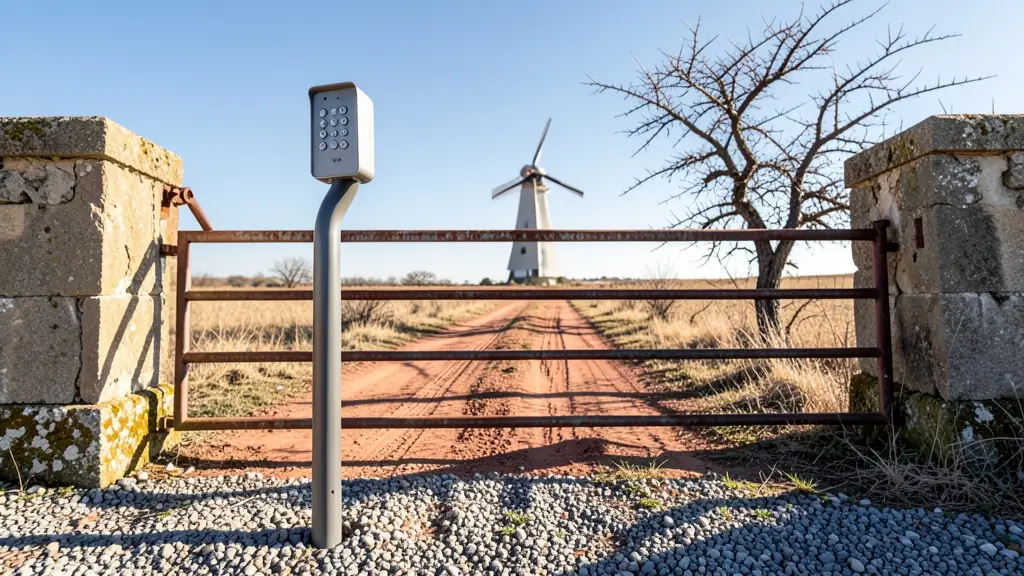
Picture a visitor pulled up at your gate, window down, stretching for a button fixed on the wrong pillar at chest height. Gate intercoms fail in small ways like that more often than electrically. The station has to sit where a driver can reach it, survive sun and rain, talk to a house that may be far up a driveway, and open the gate motor when you say so.
Pillar or gooseneck, and which side
Fix the station on the driver's side of the approach, which in South Africa is the right of the car as it faces the gate. A station on the pillar works when the driveway lets a car pull close; otherwise a gooseneck post set in concrete a short way before the gate brings it to car window height, clear of the gate's travel.
For complexes with taller vehicles, a post with two stations, one higher for bakkies and trucks, saves drivers climbing out. Keep the station clear of the gate's path, the safety beams and any gate maglock on the pedestrian gate.
Opening the gate from the house
The intercom does not drive the gate itself. A relay in the station or the indoor unit sends a pulse to the gate motor controller, the same input a push button uses. Ask the installer to wire it so the house can open the gate, and to fit a separate relay for the pedestrian gate lock if there is one.
Watch for the trigger wire picking up interference or a fault that opens the gate on its own. A gate that opens at night with no remote pressed often traces back to this wire; see gate motor repairs.
Long driveways and farms: cable, GSM or wireless
- Cable in conduit: the most dependable, and it can carry video. It needs a trench, which on a long driveway or across a farm yard is the biggest cost.
- GSM: the station calls your cellphone using a SIM card. It suits far farm gates and plots with no cable, if the signal at the gate is good. Budget for airtime and check the SIM stays active.
- Wireless: a radio link avoids the trench over a short, clear distance. Trees, walls and the house itself cut the range, so ask for a test before you commit.
Power at a far gate often comes from the gate motor's battery or a small solar panel.
One post, several jobs, and keeping it there
- Add a keypad for codes, a tag reader for residents or a fingerprint reader for staff on the same post. The video intercoms page covers a camera at the gate.
- Choose a metal, weather rated station with a small hood against rain and noon sun.
- Use tamper proof screws and a post bolted or cast into concrete.
- Run the cable inside the post and conduit so nothing is exposed to cut.
- Seal the cable entry against ants and water.
What to put in your request
- Give the distance from the gate to the house
- Say if conduit or old cable runs to the gate
- Name the type of gate motor it must open
- Ask for a gooseneck post on the driver's side
- Ask what protects the station against theft
Gate Intercoms for homes, estates, offices, factories and schools
- Homes: a station on the driver's side pillar that rings the house and opens the motor
- Estates, complexes and body corporates: a gooseneck post with a call panel and tag reader at the visitors' lane
- Offices and practices: a post at the parking gate ringing reception, which opens the gate
- Factories, warehouses and mines: a high and low station at the truck gate ringing the guardhouse
- Shops, restaurants and filling stations: a call post at the delivery yard gate for drivers arriving after hours
- Schools, colleges and creches: a station at the vehicle gate ringing the office during school hours
- Clinics, hospitals and pharmacies: a call post at the clinic's after hours vehicle gate ringing the duty desk
- Farms, smallholdings and lodges: a GSM station at the far farm gate, powered by the motor's battery or solar