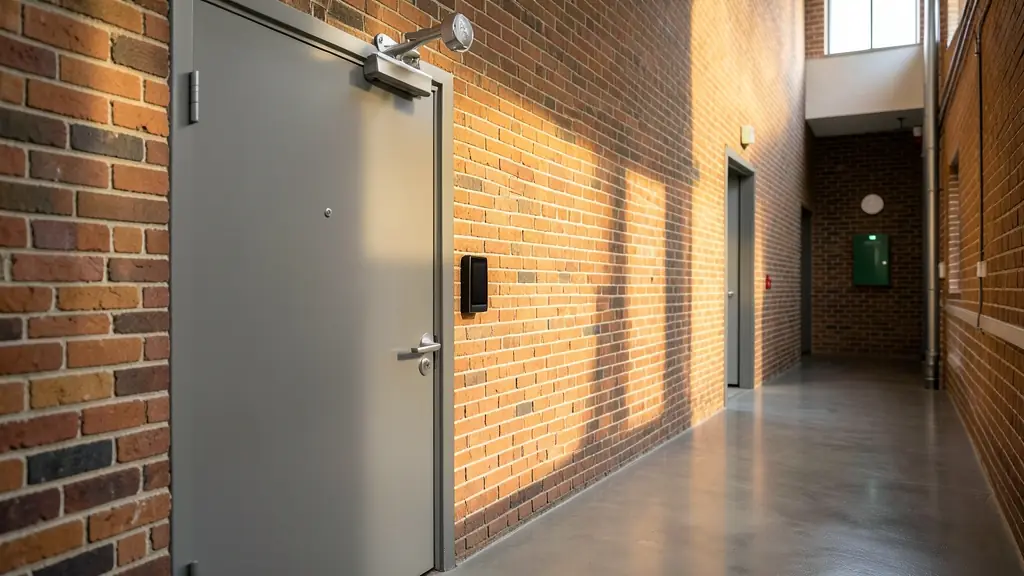
A reader on the wall is the part people notice, but a controlled door is really six things working together: the reader outside, the lock, a way out from the inside, a closer that pulls the door shut, a contact that knows it is shut, and power that does not drop. Miss one and the door gets propped open with a fire extinguisher by Friday. Here is how a single door should be done, whether it is the back door of a shop in Pinetown or the second door of a larger system.
Outside: the reader and where it goes
Mount the reader on the latch side, at a height the maker gives, so that a person can present a card or finger without stretching. A reader on a wall in the weather needs an IP65 or better rating and a hood against the afternoon sun and rain. Pick finger, face or card for the people who use the door: worn fingers on a workshop door read badly, so see fingerprint access control before you choose.
On a busy door, a card or face reader keeps the queue moving better than a fingerprint pad.
The lock: maglock, strike or motor lock
- Maglock: a magnet on the frame and a plate on the door. Simple and strong, fail safe by nature, so it releases when the power goes. The magnetic locks page covers sizes and brackets.
- Electric strike: replaces the strike plate in the frame and works with the existing lock set. Comes fail safe or fail secure, and the handle still opens the door from inside.
- Motor lock: a motorised lock in the door itself, neat on timber and good for high security doors, but it needs a cable transfer through the hinge side.
Glass doors and narrow aluminium frames limit the choice: ask whether a glass door bracket or a narrow frame strike fits before you pick a lock.
Inside: getting out, closing and knowing it is shut
A request to exit button or an exit reader lets people out; a break glass unit cuts the lock power in an emergency. A door closer pulls the door back so the lock can catch, and a door contact tells the controller whether the door is really shut.
Fire doors and doors on escape routes come under SANS 10400-T and the municipal fire by-laws, so check with the fire engineer or the fire department before fitting anything that changes how the door opens, and link the lock to the fire alarm.
Why doors fail: symptom and cause
- The door stays open after people walk through: no closer, or a closer set too weak for the wind.
- "Door held open" alarms all day: staff propping it for deliveries; add a hold open time zone or a second door.
- The maglock lets go when pushed hard: the plate is misaligned or the bracket flexes.
- The reader beeps green but the door will not open: the strike is binding because the door has dropped on its hinges.
- Doors open in load shedding: the battery is flat or was never sized. Check with the battery calculator.
What to put in your request
- Say what the door and frame are made of
- Say which way the door opens
- Mark escape routes and fire doors
- Ask for a closer and a door contact per door
- Ask which lock each door gets and why
Door Access Control for homes, estates, offices, factories and schools
- Homes: the garage door into the house or a home office opened with a finger
- Estates, complexes and body corporates: the pedestrian gate beside the boom and the gym door in the clubhouse
- Offices and practices: the reception door and the server room with a reader and a strike
- Factories, warehouses and mines: the workshop and stores doors where forklifts and wind test every lock
- Shops, restaurants and filling stations: the back door to the lane, opened by staff and logged for deliveries
- Schools, colleges and creches: the staff room and the computer lab locked outside school hours
- Clinics, hospitals and pharmacies: the dispensary door that only the pharmacist and one assistant can open
- Farms, smallholdings and lodges: the chemical store and the farm office door at the pack house