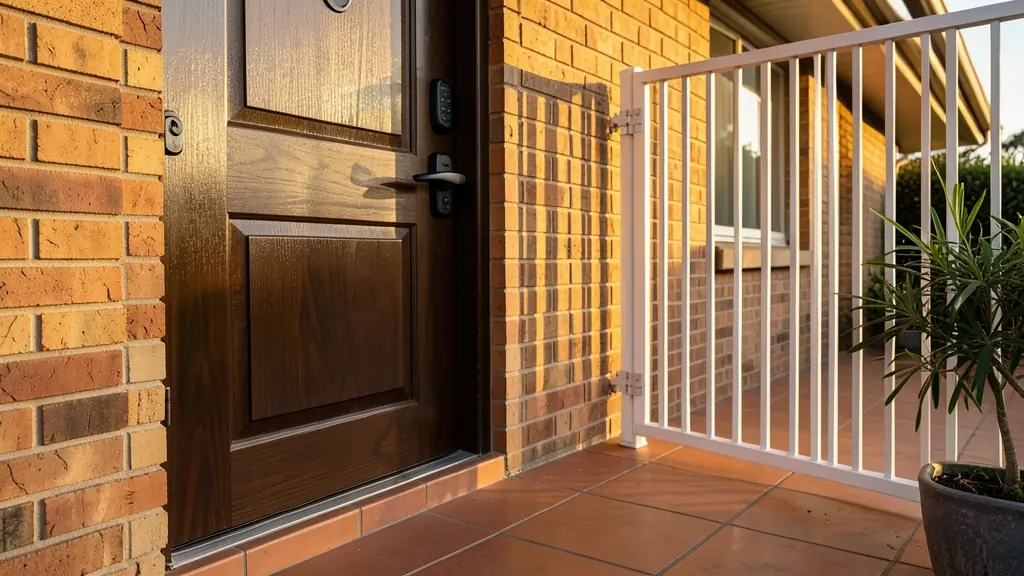
For a front door, a back office or a rental cottage, you can skip the controller, the cable and the power supply altogether. A fingerprint door lock carries the sensor, the electronics and the batteries in the handle set itself, so the door is the whole system. It suits a family tired of hiding keys under the mat, or a small practice where two people need the storeroom. It is a different thing from a networked fingerprint access control door, and the difference matters most when someone leaves, the batteries run down or the door is behind a steel gate.
Measure the door before you buy
- Door thickness: most locks fit a range; a thin hollow core door or a very thick security door may be outside it.
- Backset: the distance from the door edge to the centre of the handle hole. Match it, or plan on new holes.
- Handing: which way the door swings and which side the hinges are on. Many locks can be reversed, some cannot.
- Existing lock body: a mortice lock, a cylindrical latch or a rim lock each need a different model.
- Weather: a door that takes rain or full sun needs a lock rated for outdoor use.
The steel gate in front of the door
Many South African front doors sit behind a steel security gate, and a fingerprint lock on the door does nothing for the gate. You still carry a key for the gate, or you fit a second lock there. A gate lock lives in the weather and on a steel frame, so it needs to be made for that job; some people use a smart lock made for gates, others a keypad.
Also check that the gate leaves room to reach the handle and the sensor when it is open, and that the handle does not hit the gate bars.
Enrolling the family, and the way in when it fails
Enrol two or three fingers for each person, on different hands, so a cut or a plaster does not lock anyone out. Children's fingers change as they grow and may need re-enrolling. Older people and anyone with worn ridges, such as a gardener or a bricklayer, may read badly; give them a PIN or a card if the lock supports it.
Every decent lock has a mechanical key override, and many have an emergency USB power point under the handle. Keep the key somewhere other than the house, and change the batteries when the lock warns you, not when it dies.
What a standalone lock cannot do
- It cannot remove a person from three doors at once; you delete them at each lock.
- It keeps a short log, if any, and only on the lock itself.
- It cannot release on a fire alarm or link to an alarm panel.
- It has no exit reader, so you cannot tell who left and when.
Once you have more than a couple of doors or staff who come and go, a wired door access system is usually the better fit.
What to put in your request
- Give the door thickness and backset
- Send a photo of the existing lock
- Say if a security gate sits in front
- Say if the door faces rain or sun
- Ask about the key override and batteries
Fingerprint Door Locks for homes, estates, offices, factories and schools
- Homes: the front door or the kitchen door, so nobody hides a key under the mat
- Estates, complexes and body corporates: a unit's front door where the complex handles the gate and the boom
- Offices and practices: a back office or a storeroom that two or three people need to open
- Factories, warehouses and mines: a site manager's office in a small workshop, kept simple and unwired
- Shops, restaurants and filling stations: the stock room door in a small shop with a few trusted staff
- Schools, colleges and creches: the principal's office or a small store room for exam papers
- Clinics, hospitals and pharmacies: a consulting room cupboard area or a practice's back office door
- Farms, smallholdings and lodges: the farmhouse door or the office at the pack house, no cable needed