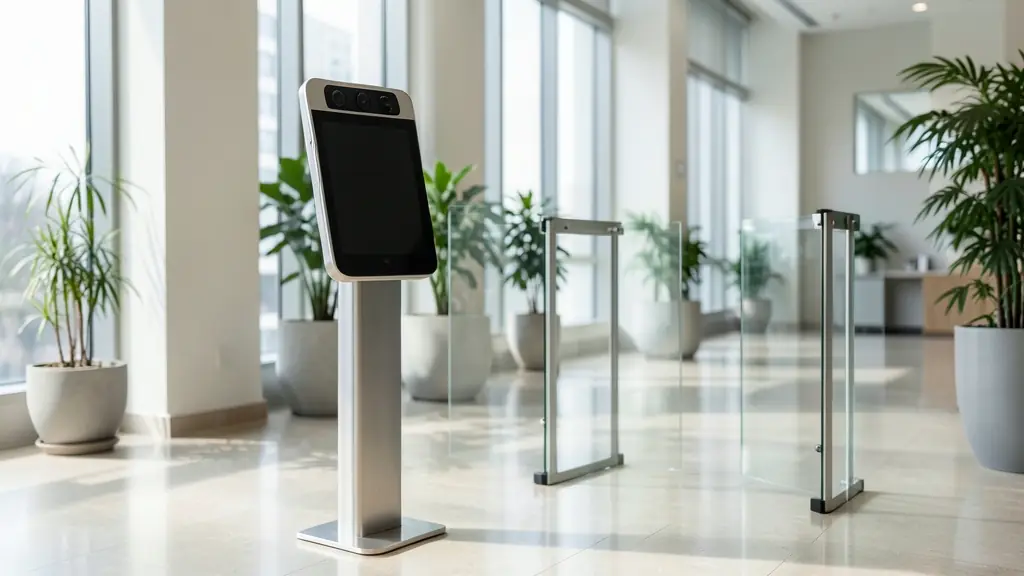
Nobody touches anything. A worker walks up, glances at the terminal, the turnstile releases, and the next person is already there. That is why factories with a big shift change and estates tired of cloned tags are looking at faces instead of fingers. It is also why disappointed buyers exist: a terminal facing the afternoon sun, a workforce in hard hats, or a cheap camera that opens for a photo on a phone. Here is what separates a face reader that works from one that frustrates everybody.
Photos, screens and liveness detection
A plain camera compares shapes and can be tricked by a printed photo or a video held up to it. Better terminals combine a visible light camera with infrared and often a depth sensor, so they can tell a real, three dimensional, living face from a flat image. This is called liveness detection, and the international standard for testing it is ISO/IEC 30107.
Ask the supplier what liveness method the terminal uses and whether it has been tested against that standard. Then test it yourself on site with a photo and a phone screen before you sign anything.
Light, headgear and mounting: if this, then that
- If the terminal faces a west facing glass door: the afternoon sun behind people makes their faces dark. Move it, turn it, or shade the door.
- If it stands at an outdoor gate: fit a canopy and choose an outdoor rated unit with good backlight handling.
- If staff wear hard hats or helmets: enrol them wearing the same gear, or have them lift the brim at the reader.
- If masks are common: check that the model is designed to read masked faces, and expect slower reads.
- If users vary a lot in height: mount at the maker's height and angle, not the electrician's guess.
Throughput at the shift change
A face terminal can read people at walking pace, which is its big advantage over a fingerprint queue. But the turnstile, the door or the boom behind it still sets the pace, so a fast reader on a single slow door achieves little. At a factory gate the question is how many lanes clear the shift in the time you have.
Size the lanes with the turnstile lane calculator and the terminals with the clocking terminal calculator. If the readers also clock time, read biometric clocking.
When face recognition is the wrong choice
Choose something else if most users wear full face protection, if the only mounting point faces straight into the sun, or if you need certainty between identical twins, which faces may not give. A two person dispensary may be better served by a fingerprint, and a vehicle gate by number plate recognition.
Faces are also personal information that people notice. Put up a clear notice, explain the purpose, offer a card to anyone who does not consent, and read biometric data and POPIA before you enrol a single person.
What to put in your request
- Give the peak headcount and the time to clear it
- Say whether the reader is indoors or outside
- Mention hard hats, helmets or masks
- Ask how liveness detection is tested
- Ask what is stored and for how long
Face Recognition Access Control for homes, estates, offices, factories and schools
- Homes: a touchless reader at the front door for a family that keeps losing remotes
- Estates, complexes and body corporates: residents walk through the pedestrian gate on a face read, visitors use a code
- Offices and practices: face terminals on speed gates in the lobby so staff do not queue at reception
- Factories, warehouses and mines: face readers on turnstile lanes so a whole shift clocks in without touching anything
- Shops, restaurants and filling stations: the staff entrance at a large store, with times recorded as staff walk past
- Schools, colleges and creches: touchless entry for staff at the admin block, with parents' consent before any learner use
- Clinics, hospitals and pharmacies: hands free entry to wards and theatres where staff avoid touching surfaces
- Farms, smallholdings and lodges: a shaded face terminal at the pack house where dusty hands defeat finger readers