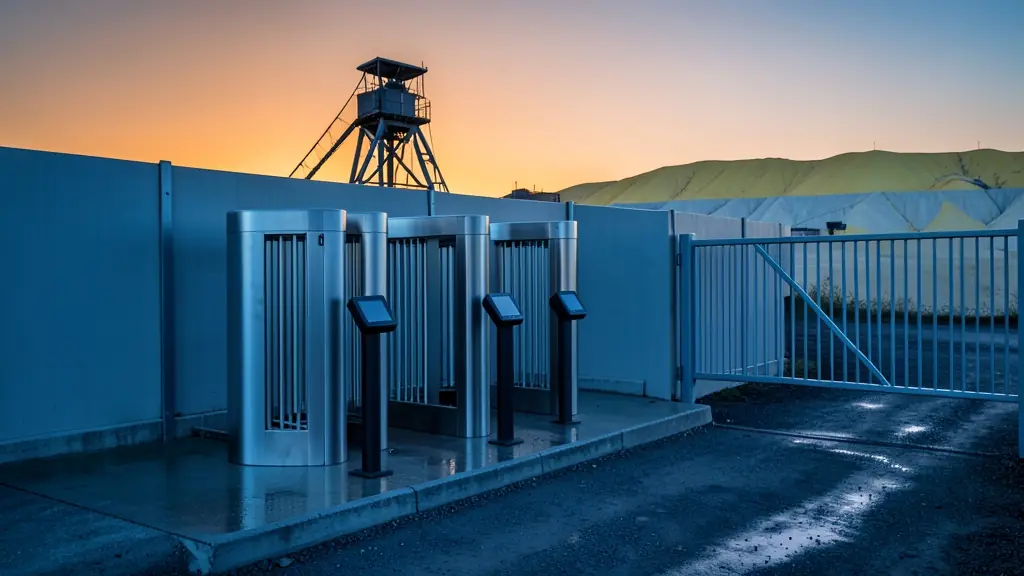
Picture the 06:00 shift change at a plant near Rustenburg: hundreds of people arriving within minutes, each one to be counted in. A turnstile turns that crowd into a single file record of who came through, and stops the second person sneaking in behind the first. The hard part is not buying the turnstile. It is choosing the right type for the site, fitting enough lanes for the peak, and deciding what each person shows the reader on top. Get those three right and the rest is concrete and cable.
Four kinds of lane and where each belongs
- Tripod turnstile: waist high with three rotating arms. The workhorse of factory and depot staff gates, usually under a roof, because a determined adult can climb over it.
- Full height turnstile: a rotating cage from floor to head height. Built for unmanned perimeters, mines and stadiums, and the type that stands outside in the rain.
- Speed gate: glass flaps or swing wings in a slim cabinet. It suits an office lobby where a receptionist can see the lanes.
- Swing gate lane: a wider gate beside the others for wheelchairs, trolleys, deliveries and evacuation. Every installation needs one.
Count the lanes for the peak, not the average
A turnstile that copes at 10:00 can still leave a queue out to the road at the shift change. What matters is how many people must pass in the busiest few minutes and how long each one takes at the reader: a card tap is quick, a fingerprint on a dusty morning takes longer, and a face terminal reads people at walking pace.
Put your peak numbers into the turnstile lane calculator before you ask for prices. If the turnstiles also serve as the clocking point, read the biometric clocking systems page, because the same queue decides both.
Choosing what sits on top
- If workers have worn or dirty fingers (masons, farm and foundry staff), then a face recognition terminal or a card avoids the retries that build a queue.
- If everyone wears hard hats and dust masks, then test face reading with the gear on, or pair a card with a fingerprint.
- If visitors and contractors come and go daily, then a QR code reader lets reception issue one day passes.
- If the site tests for alcohol at the gate, as many mines do, then ask for the breathalyser to be linked so the turnstile stays locked on a fail.
Site work the quote must cover
- A level, reinforced concrete slab, with each turnstile bolted down with chemical or expansion anchors.
- Conduit under the slab for power and data before the concrete is poured.
- A roof or canopy over tripods and speed gates, and drainage so full height cages do not stand in water.
- A link to the fire alarm so the arms drop or the wings open when it sounds; check the evacuation route with the fire engineer or the fire department.
- Battery backup for the controllers, sized with the backup battery calculator.
What to put in your request
- Give the number of people in the peak minutes
- Say tripod, full height or speed gate
- Say whether the lanes are under a roof
- Name the credential: finger, face, card or QR
- Ask for the slab, conduit and swing lane
Turnstile Gates for homes, estates, offices, factories and schools
- Homes: rarely used at a home, though some large lifestyle properties fit one at a staff gate
- Estates, complexes and body corporates: a pedestrian turnstile at the gatehouse for domestic workers, gardeners and walking residents
- Offices and practices: speed gates in the lobby so staff badge in and visitors wait at reception
- Factories, warehouses and mines: tripod or full height lanes at the staff gate, often doubling as the clocking point
- Shops, restaurants and filling stations: a staff entrance turnstile at a mall service corridor or distribution centre
- Schools, colleges and creches: a controlled pedestrian entrance for learners in the morning, opened wide at dismissal
- Clinics, hospitals and pharmacies: a staff entrance turnstile at a hospital, keeping visitors to the main reception
- Farms, smallholdings and lodges: a turnstile at the pack house entrance so seasonal workers are counted in and out